Support from the Bone
The replacement is anchored in the jaw rather than clipped to a plate or filed neighbouring teeth.
669, Sector 37, Faridabad, Haryana, 121003
Monday–Sunday, 9:00 am – 8:00 pm+91 92058 32143+91 98180 14680WhatsApp
Tooth Replacement · Sector 37, Faridabad
A dental implant can replace a missing tooth with a fixture in the bone that later supports a crown, bridge or denture. It is a strong option when gums and bone can support it — not an automatic answer for every gap. At The Tooth Story, candidacy, healing time and alternatives such as a bridge or denture are discussed before anyone talks about placement day.
Is a missing tooth changing how you eat or smile?
An implant consultation looks at the gap and at the rest of the mouth: gums, bone, neighbouring teeth and medical history.
Led by Dr. Ritika Satija, MDS.
Start with candidacy, not with a promised implant package.
A more fixed replacement
when the jaw can support it.
Plan the healing.
Restore the bite.
Implants, implant-supported dentures and full-mouth concepts can be discussed when they fit. Educational terms such as All-on-4 or All-on-6 are not a promise that every jaw qualifies. Healing is part of implant dentistry and cannot be skipped.
A dental implant is a root-form fixture placed in bone to support a replacement tooth or teeth. After a healing phase, it can hold a crown, a bridge, or help retain a denture.
Unlike a conventional bridge, an implant-supported crown does not rely on preparing the neighbouring teeth — which matters when those teeth are healthy.
It is still surgery, followed by healing, then a restoration. The visible tooth is the last step, not the first.
If gum disease, limited bone or medical factors make an implant unwise, a bridge or denture may be the more proportionate plan.
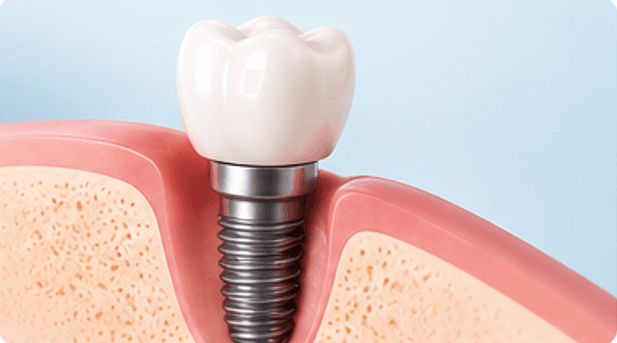
The replacement is anchored in the jaw rather than clipped to a plate or filed neighbouring teeth.
Gums, bone, healing and medical history decide whether an implant is appropriate.
Placement, healing and the final crown or denture are separate phases with reviews in between.
Implants help when a more stable replacement is wanted and the mouth can support that plan. They are not the only way to fill a gap.
The number of missing teeth changes the design.
Some patients are less bothered by the denture than by how much it moves.
Biology and timing still override preference.
Not every jaw is an implant candidate, and not every candidate needs an implant. Examination, X-rays and medical history come before a recommendation.
The useful question is not only “can an implant go in?” but “what restoration will it hold, and what does healing look like for this site?”
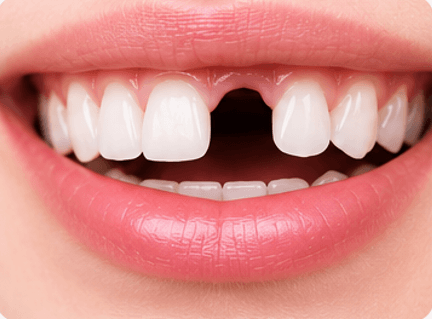
The gap, neighbouring teeth, gums, bite and medical history are reviewed. X-rays are used when they change planning. Alternatives are named, not hidden.
A single crown, a larger bridge, or denture retention are different plans. The number of implants and the final tooth design are decided together.
The fixture is placed as a planned surgical procedure. You should be numb for the surgery; soreness afterwards is still expected because it is surgery.
The bone needs time to integrate with the implant. This phase cannot be skipped because someone wants the crown sooner.
Once the site is ready, the crown, bridge or denture component is fitted and you are shown how to clean around it.
Some sites need extra planning or grafting. Full-arch ideas such as All-on-4 or All-on-6 are educational options for selected mouths, not a protocol promised to every patient.
Implants are listed alongside bridges, dentures, root canal treatment and gum care, so replacement is planned comparatively rather than as the only product in the room.
You should hear when a bridge or denture is more proportionate, not only when an implant is possible.
Dr. Ritika Satija’s endodontic and restorative view matters because missing teeth often sit beside compromised teeth, not in isolation.
Periodontal inflammation is treated before elective implant surgery. Implants still need healthy supporting tissues.
Timeline, reviews and what you can chew in the meantime are part of consent, not small print.
Implant-supported dentures are a listed option for selected patients whose main complaint is movement, not the idea of a denture itself.
X-rays are used when they change the plan. Hardware that is not published for this clinic is not advertised as if it were.
These are reasonable expectations when candidacy is good and cleaning afterwards is maintained. They are not guaranteed outcomes for every gap.
For many single-tooth and selected multiple-tooth cases, the replacement feels more stable than a removable plate.
An implant crown does not need those teeth prepared as bridge supports when they are healthy.
Where a conventional denture lifts, implant retention can change daily comfort for people who are candidates.
When several teeth are failing, implants may be one stage in a sequenced plan rather than a one-visit fix.
Placement is done under local anaesthesia with planned comfort measures. It remains a surgical procedure, so soreness afterwards is normal.
Candidacy, healing, bridges versus implants, and cleaning afterwards.
Candidacy depends on gums, bone support, medical history and the position of the missing tooth. A consultation and appropriate imaging are needed before a meaningful yes or no.
Yes. Healing is a normal part of treatment. The implant is usually placed first, then the area is allowed to heal before the final crown, bridge or denture component is completed.
Not automatically. An implant can avoid using neighbouring teeth for support. A bridge may still be better when surgery is unsuitable, timing differs, or the neighbouring teeth already need crowns.
It depends on how many teeth are missing, whether you want a removable or more fixed-feeling option, surgical candidacy and your goals. Some people do well with conventional dentures; others benefit from implant-supported stability.
Placement is done under local anaesthesia, but it is still surgery and some soreness afterwards is normal. The experience varies with the site, the number of implants and whether extra procedures are needed.
Full-mouth implants and rehabilitation can be discussed when suitable. Suitability is decided only after planning. Concepts such as All-on-4 and All-on-6 are not a promise that every patient fits those protocols.
Yes, for selected patients. Implant-supported dentures are listed at The Tooth Story as a more stable option. Whether that fits depends on the arch, tissues and overall candidacy.
They need careful daily cleaning and professional review. An implant is not a natural tooth, but the gum around it still reacts to plaque and neglect.
Book an implant consultation in Sector 37, Faridabad to see whether an implant, a bridge or a denture is the more responsible way to replace what is missing.