Wisdom teeth, or third molars, usually appear in the late teens or twenties, when there may not be enough space at the back of the jaw. Some erupt into a cleanable position and behave like any other molar. Others remain fully or partly under the gum or bone—an impacted wisdom tooth. Partial eruption creates a flap of gum that traps plaque and food, which can inflame into pericoronitis: swelling, a bad taste, and pain on opening. Wisdom teeth can also decay where they lean against the second molar, or contribute to tooth pain that feels like an earache. Crowding of front teeth is a concern many people raise; the evidence that wisdom teeth are the main cause of late crowding is mixed, so a dentist should not use crowding alone as an automatic reason to operate. This page explains common problems, how X-rays guide decisions, when cleaning and time are reasonable, and when oral surgery to remove a third molar may be discussed after examination.
Depending on the diagnosis, care may involve Oral Surgery. A dentist can explain which option, if any, is suitable after examining your mouth.
What are wisdom tooth problems?
A wisdom tooth problem is any symptoms or disease related to a third molar: pain, infection, decay, cyst formation around an unerupted tooth, or damage to the neighbouring second molar. Impaction describes a tooth that cannot fully erupt because of bone, gum, or the tooth in front. Impactions are often described by angle: upright, tilted forward (mesial), backward, or horizontal. You cannot diagnose the angle from how the cheek feels. Some buried teeth remain quiet for years. Others announce themselves with a swollen flap or a cavity you cannot see in the mirror.
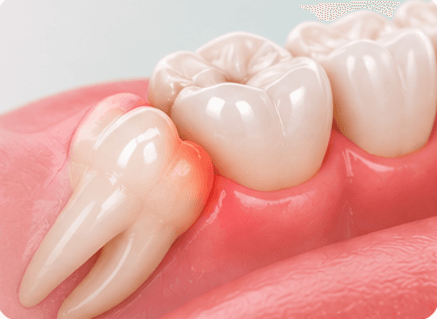
Pericoronitis is specifically inflammation of the gum around a partly erupted wisdom tooth, most often a lower one. The operculum (flap) becomes a pocket. Biting the flap with an upper tooth can add trauma. Upper wisdom teeth can grow toward the cheek and ulcerate it. Rarely, a sac around an unerupted tooth can enlarge as a cyst and thin the jawbone; that is uncommon but is one reason silent impacted teeth are sometimes imaged. “Wisdom tooth problems” therefore includes infection, mechanical irritation, caries, periodontal defects behind the second molar, and occasional pathology of the follicle—not only “it hurts, so take it out today.”
Causes
Human jaws are often short relative to the size of third molars. Evolution and diet stories are popular; the clinical fact is simply crowding at the ramus of the mandible. A tooth trying to erupt into that bottleneck stays partial. Plaque under the flap is the usual cause of pericoronitis. Upper respiratory infections or stress and fatigue sometimes coincide with a flare, probably because hygiene slips and immunity is busy elsewhere—not because a cold “goes into the tooth.”
Decay happens because wisdom teeth are hard to brush. The distal surface of the second molar can decay where an impacted third molar leans on it. Food packing causes local gum disease in that site even if the rest of the mouth is acceptable. Trauma from a prominent upper third molar can cause cheek chewing. Orthodontic relapse of lower incisors has many causes—late growth, fibre pull, natural crowding with age—so blaming only the wisdom teeth oversimplifies. Cysts and tumours related to the follicle are infrequent causes of problems on an X-ray rather than of everyday sore flaps.
After removal, different “causes” appear as complications: dry socket (loss of the clot in the socket, more common in lower molars and in smokers), infection, or temporary nerve disturbance when roots sit near the inferior alveolar nerve. Those are outcomes of surgery, not reasons the tooth erupted. Understanding causes helps you see why antibiotics without cleaning the flap often fail, and why a dentist looks at the second molar’s health before deciding the third molar’s fate.
Signs and symptoms
Local signs include pain at the back of the mouth, swelling of the gum behind the last standing molar, difficulty opening, pain on swallowing, a foul taste, and swollen lymph nodes. The cheek may feel bitten. Pain can refer to the ear, which people mistake for an ear infection. You may see pus from under a flap. Systemic signs such as fever suggest a more significant infection. Some people only notice bad breath or a sore throat on one side.
Quieter problems include a cavity on the wisdom tooth or on the tooth in front, a periodontal pocket you cannot clean, and radiographic bone loss. Numbness or tingling in the lip is not a typical eruption symptom; if it occurs, it needs urgent assessment and is more often discussed in relation to anatomy before surgery or as a rare post-operative issue. Jaw stiffness can accompany pericoronitis or, separately, muscle pain; the dentist tries not to mix up a gum flap with a TMJ problem even though both can limit opening.
- Pain or swelling behind the last molar
- Gum flap that bleeds or weeps a bad taste
- Limited mouth opening or pain on swallowing
- Earache on the same side as a third molar
- Cheek biting from a high upper wisdom tooth
- Decay or food trap between the second and third molar
Who is at risk
Late adolescents and young adults are the usual group because that is when eruption happens. People with small jaws, crowded misaligned teeth, or a family pattern of impaction are more likely to have space problems. Poor access for cleaning raises pericoronitis and caries risk. Smoking worsens gum infection and dry-socket risk if surgery is done. Upper respiratory illness can coincide with a flare around a flap.
Older adults can still have silent impacted teeth that later decay or develop gum pockets, and healing after surgery tends to be slower with age. People who have never had a dental radiograph of the back of the jaws may be unaware of horizontal impactions. Pregnancy does not create wisdom teeth, but a flare of pericoronitis can be miserable and needs careful, often conservative, management with an obstetric-aware dental plan. Immunosuppression makes infection around a flap more concerning.
Diagnosis
The dentist looks at eruption status, the operculum, contact with the opposing tooth, and the health of the second molar. Probing around the flap, checking opening range, and noting fever or floor-of-mouth swelling are part of an infection exam. Intraoral radiographs or a panoramic film show angle, depth, root shape, and proximity to the nerve canal or sinus. That anatomy changes the risk discussion for removal.
Not every painful back tooth is a wisdom tooth. Decay in a second molar, a TMJ strain, or tonsil pain can mimic it. If the third molars are absent (never formed or already removed), the diagnosis moves elsewhere. For repeated pericoronitis, the pattern of flares is itself diagnostic. Cysts are diagnosed on imaging, sometimes with further scans if the lesion is large. You should leave with a clear statement: acute infection to settle first, monitor, or plan removal—and why.
Effect on oral health
A chronically inflamed flap is a plaque reservoir. The second molar can lose bone on its back surface, which is a difficult area to repair later. Decay on either tooth can progress to pulpitis. Repeated infection interrupts eating on that side and can spread, in severe cases, toward facial spaces. Cheek ulcers from a misangled upper tooth are painful and slow to heal if the cause remains.
If a wisdom tooth is kept, it still needs cleaning like any molar; many people cannot floss it. If it is removed, the second molar becomes the last tooth and must be kept clean at the new back surface. Late crowding of incisors may continue even after removal because ageing and late mandibular growth also play roles. Honest counselling avoids promising perfectly straight front teeth after extraction. Oral health after a decision—keep or remove—depends on hygiene and on protecting the second molar.
Treatment options
Acute pericoronitis is often managed first by gentle cleaning under the flap, saline or antimicrobial irrigation, pain relief, and improving access. An opposing tooth that keeps biting the flap may be discussed. Antibiotics are considered when infection is spreading, when there is fever, or when medical risk is high—not as a routine for every sore gum. Once the flare settles, the dentist and patient decide whether the tooth can erupt into a maintainable position or whether removal is the more stable plan.
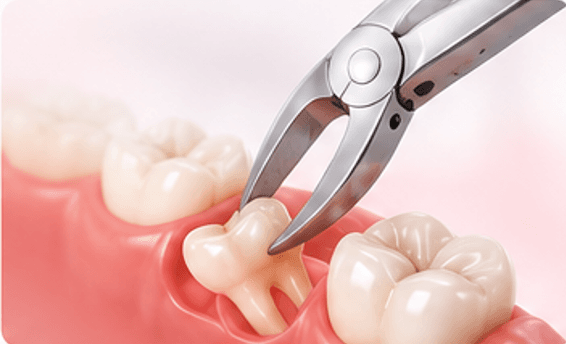
Removal is a form of oral surgery. Simple erupted teeth may come out much like other extractions under local anaesthetic. Impacted teeth can require a small amount of bone removal and sectioning of the tooth. Risks include swelling, bruising, dry socket, sinus communication for some uppers, and, for deep lowers, possible temporary or rarely lasting altered sensation of lip, chin, or tongue depending on nerve position. A dentist should describe those risks in proportion to your X-ray, not as a generic scare list.
Not every impacted tooth must come out. Fully buried, disease-free third molars in older people are sometimes monitored with occasional films. If the second molar is already badly damaged, the plan may involve that tooth’s restoration or root canal treatment as well. General dentistry still matters: cleaning, checking decay, and deciding timing. Extraction is not an emergency solely because a tooth is unerupted. It becomes more pressing with recurrent infection, unrestorable decay, cysts, or damage next door.
If left untreated
Repeated pericoronitis can become more frequent. Infection can extend, causing more swelling and limited opening. The second molar can decay or lose periodontal support until it, too, is compromised. A cavity on a wisdom tooth can reach the pulp while you still cannot see the hole. In uncommon cases, a follicular cyst can expand. None of these outcomes is certain; some impacted teeth remain quiet. The uncertainty is why imaging and a clinical look beat folklore.
Leaving an easily cleanable, fully erupted, healthy wisdom tooth is not neglect. Leaving a chronic food trap that you cannot brush, while the next tooth suffers, is a different choice. People also delay because they fear surgery, then present with swelling that makes anaesthesia and access harder. Settling infection first, then planning, is often safer than ignoring flares until a weekend emergency.
Prevention
You cannot prevent a tooth from being impacted if there is no space. You can reduce pericoronitis by cleaning as far back as you can reach, using a small-headed brush, and considering a water flosser or a syringe as advised for a flap—without injuring the tissue. Regular dental visits in the late teens catch eruption problems early. Avoiding smoking reduces gum infection and, if surgery happens, dry-socket risk.
After removal, following wound-care advice—not sucking through straws in the early period if you were told not to, keeping to the prescribed oral hygiene around the site, and attending review if pain escalates after a few days—helps recovery. For teeth that are being monitored, prevention means reporting new pain and not assuming a buried tooth is irrelevant forever. Fluoride and diet still apply; wisdom teeth get cavities for the same reasons other molars do.
When to see a dentist
See a dentist if you have pain at the back of the jaw, a swollen gum flap, a bad taste from that site, difficulty opening, or decay you can feel on a last molar. Urgent care is appropriate for spreading facial swelling, fever, trouble swallowing, or eye swelling. Teenagers can be examined as third molars develop so that a panoramic film, when indicated, is timed usefully.
If you have had several flares that settle with antibiotics alone, ask for a plan that addresses the flap or the tooth rather than repeating medicine. Numbness, a rapidly growing swelling, or a tooth that stopped erupting years ago but now hurts still deserves an exam. A dentist can explain whether monitoring, cleaning, or removal fits the findings on your X-ray and in your mouth.
Frequently Asked Questions
- Do all wisdom teeth need to be removed?
- No. Third molars that erupt into a cleanable position, meet an opposing tooth reasonably, and stay free of decay and gum disease can be kept. Impacted teeth that are buried and disease-free are sometimes watched, especially later in life. Removal is more often discussed for recurrent pericoronitis, unrestorable decay, cysts, or harm to the second molar. The decision is individual and should follow an examination and radiograph, not a rule that every adult must have them out.
- Will wisdom teeth crowd my front teeth?
- Late crowding of lower incisors is common even in people who never developed wisdom teeth. Studies do not show a simple one-to-one cause. Removing third molars solely to keep teeth straight is not strongly supported as a routine. If crowding bothers you, orthodontic assessment looks at growth, fibre pull, and retention, not only at the back of the jaw. Infection or decay around a wisdom tooth is a firmer reason to treat than a fear of crowding alone.
- What is pericoronitis and how is it treated?
- Pericoronitis is inflammation of the gum flap over a partly erupted wisdom tooth. Food and plaque sit underneath. Treatment usually starts with professional cleaning of the area, irrigation, pain control, and hygiene advice. Antibiotics are added if infection is spreading or you are systemically unwell. Once calm, the dentist discusses whether the flap will remain a trap and whether removal is the more reliable long-term option.
- What is a dry socket after wisdom tooth removal?
- Dry socket is a painful condition when the blood clot in the socket breaks down or is lost, exposing bone. It is more often discussed after lower molar surgery and in smokers. Pain typically increases a few days after the extraction rather than steadily improving. A dentist can place a soothing dressing and give care advice. It is not the same as a spreading infection, though the two should be distinguished in clinic.
- Is there a best age to take wisdom teeth out?
- Roots are often less fully formed in the late teens, and healing is frequently straightforward in young healthy adults, which is why some impacted teeth are removed then. Older patients can still have surgery when disease is present, with a frank talk about healing time and medical factors. There is no universal birthday at which every third molar must go. Anatomy on the radiograph and symptoms matter more than a round number.
- Can I wait out wisdom tooth pain with painkillers?
- Short-term pain relief can help you reach an appointment. Recurrent pain from a flap or a decaying third molar usually returns. Spreading swelling is not a wait-and-see situation. Painkillers do not clean under an operculum or fix an impacted angle. If you cannot open your mouth enough to eat or drink, seek care promptly rather than increasing doses beyond the label.
- Are upper and lower wisdom teeth different?
- Lower third molars are more often implicated in pericoronitis and in nerve-proximity discussions because of the mandibular canal. Upper ones more often ulcerate the cheek or sit near the sinus, which affects extraction planning. Both can decay and both can be impacted. A panoramic film shows the pair of issues in one view. Treatment is still tooth-by-tooth, not “uppers are always easy.”
- What should I expect after wisdom tooth surgery?
- Swelling and stiffness often peak around the second or third day, then ease. Soft foods, gentle hygiene as instructed, and avoiding smoking support the clot. Some oozing on the first day can be normal; heavy bleeding, fever, or worsening swelling should be reviewed. Numbness that persists needs a call. Follow the specific advice you were given, because bone removal and stitch use vary between simple and surgical extractions.