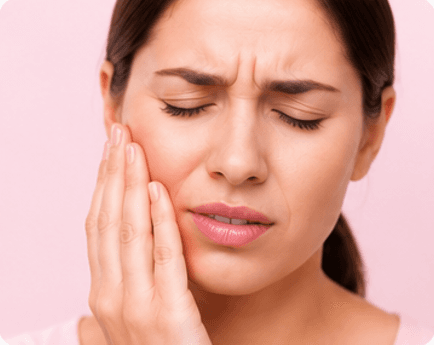
Tooth pain can feel sharp, dull, throbbing, or electric. It may stay in one tooth, spread along the jaw, or even seem to come from the ear or temple. People often wait because the ache fades after a painkiller, then feel surprised when it returns at night. A dentist does not treat “pain” as a single disease. The same toothache can come from a deep cavity, a cracked filling, gum infection, an erupting wisdom tooth, or bite forces that bruise the ligament around a tooth. Mapping the source usually needs questions, a clinical exam, and often a radiograph. Until that happens, home remedies can soothe symptoms but cannot confirm whether the pulp—the living tissue inside the tooth—is still recoverable or already dying. This page explains how tooth pain is thought about in clinic, which warning signs deserve prompt attention, and which treatments a dentist may discuss after seeing the actual tooth.
Depending on the diagnosis, care may involve Root Canal Treatment, General Dentistry or Oral Surgery. A dentist can explain which option, if any, is suitable after examining your mouth.
What is tooth pain?
Dentists use “toothache” as a plain-language label for pain that the patient believes comes from a tooth. Clinically, that sensation can arise from dentine (the layer under enamel), the pulp, the periodontal ligament that holds the tooth in bone, nearby gums, or even structures that are not dental at all. Cold air on an exposed root can feel like a needle. Inflammation inside the pulp can produce a lingering ache after hot drinks. An infection at the root tip can create pressure that feels worse when you bite. Because nerves in the jaws share pathways, pain from a lower molar can be reported as earache, and pain from an upper tooth can be mistaken for sinus pressure.
It also helps to separate reversible irritation from irreversible pulpitis and from an abscess. Reversible sensitivity often lasts only a second or two after a trigger and then settles. Irreversible pulpitis often lingers, wakes people at night, and may not have a clear “off switch.” Once the pulp loses its blood supply, the tooth can go quiet for a while, then swell as bacteria move into the bone around the root. That quiet interval is why a tooth that “stopped hurting by itself” still needs examination. Pain that disappears is not the same as a tooth that has healed.
Tooth pain is therefore a signal to locate inflamed or infected tissue, not a reason to assume you already know the treatment. Two people with similar aching can need completely different care: a simple filling, root canal treatment, periodontal therapy, an adjustment of a high filling, or referral for oral surgery if a tooth cannot be saved or is badly impacted. The clinical question is always: which structure is generating the pain, and is that process still limited to the tooth or already involving bone and soft tissue?
Causes
The most familiar cause is tooth decay that has reached dentine or the pulp. Acids from plaque bacteria dissolve enamel, then progress inward. Once dentine tubules are open, temperature and sweets can trigger a jolt. If bacteria reach the pulp, inflammation follows. A leaking or fractured filling can create the same pathway even when the tooth “already had treatment.” Cracks from chewing ice, grinding, or an old large restoration can flex under bite force and fire the nerve without a classic hole on the chewing surface.
Gum-related pain is easy to mislabel as a toothache. Food packed between teeth, an ulcer under a denture, or an acute gum infection around a wisdom tooth can all feel dental. Gum disease can expose roots, and exposed roots are often cold-sensitive. A periodontal abscess—a pocket of infection in the gum and bone beside a tooth—can cause throbbing that the patient points to as “this molar,” even though the pulp inside the tooth is still alive. Distinguishing pulpal pain from periodontal pain is one of the main jobs of an examination.
Less obvious sources include a recently placed filling that sits high, orthodontic movement, sinus congestion near upper back teeth, and jaw-muscle tension. After dental work, mild soreness for a short period can be expected as tissues settle; escalating pain, swelling, or fever is a different pattern. Medications that dry the mouth can raise decay risk over months, which later shows up as toothache. Trauma—even a bump that seemed minor at the time—can slowly kill a pulp. Because so many pathways exist, guessing from an internet list is unreliable. A dentist correlates your story with tests: percussion (tapping), cold testing, probing of gums, and imaging.
Signs and symptoms
People describe toothache in very specific ways, and those details matter. Pain that flashes with ice cream and vanishes may point to dentine sensitivity or a shallow lesion. Pain that lingers for minutes after heat can suggest pulp inflammation. Pain on biting, especially on a single cusp, raises the possibility of a crack. A dull ache that worsens when you lie down often accompanies inflammatory pressure inside a tooth or around a root. Swelling of the gum, face, or lymph nodes under the jaw suggests that infection may have left the tooth and entered surrounding tissues.
Other clues include a bad taste, a pimple-like bump on the gum (a draining sinus), a tooth that feels “high,” or pain that radiates to the temple or ear. Some teeth become discoloured after the pulp dies. Sensitivity to sweets along the side of a tooth can hint at decay between teeth that you cannot see in the mirror. Occasional people have almost no warning until a filling falls out or a tooth fractures. Absence of pain does not prove health; some chronic infections smoulder with only mild pressure on chewing.
- Short, sharp zings with cold air or cold drinks
- Lingering ache after hot food or tea
- Pain when chewing or when teeth meet
- Night-time throbbing that is hard to ignore
- Swelling, fever, or difficulty opening the mouth
- A gum boil or salty discharge near one tooth
Who is at risk
Anyone with unrestored decay, leaking restorations, or a long gap since the last dental exam can develop tooth pain. People who sip sweet drinks throughout the day, graze on sticky snacks, or have a dry mouth from medicines or mouth breathing often accumulate new lesions at the gumline or between teeth. A history of large fillings increases the chance of cracks and recurrent decay under old material. Night-time grinding can overload teeth that already have restorations.
Risk also rises after dental injury, during orthodontic treatment when teeth are moving, and around partially erupted wisdom teeth. Pregnancy does not cause cavities by itself, but snacking patterns and gum inflammation can change comfort. People with diabetes may experience infections that feel more aggressive. Children can have toothache from decay in baby teeth that still need assessment, because infection in a primary molar can affect comfort, sleep, and the developing adult tooth. None of these factors prove you currently have a dying nerve; they only explain why a dentist takes certain histories seriously.
Diagnosis
Diagnosis starts with listening. When did the toothache begin? Is it spontaneous or only with triggers? Does it linger? Can you point to one tooth? Have you had recent dental work, a knock, or sinus symptoms? The dentist then looks for cavities, cracks, swelling, and gum pockets, and may use magnification. Cold spray or ice on a tooth tests pulp responses. Tapping and gentle bite tests look for ligament inflammation. A probe checks whether gums bleed and how deep the pockets are, because a gum problem can mimic a pulp problem.
Radiographs help show decay between teeth, bone loss around roots, and whether a previous root filling is incomplete. They do not always show cracks. Sometimes more than one tooth could explain the pain, and the dentist may test neighbours to avoid treating the wrong one. If the picture is mixed, the plan may be to treat the most likely source and review, or to refer for specialist tests. Honest diagnosis sometimes means saying “this looks pulpal” or “this looks periodontal” rather than promising a single procedure on the first visit.
Effect on oral health
Untreated sources of tooth pain often progress. Decay does not reverse once a hole has formed in enamel. Inflamed pulp can recover if the irritant is removed early, but prolonged inflammation can lead to necrosis, meaning the tissue inside the tooth dies. Bacteria then use the root canal as a pathway into the jawbone. An abscess can destroy bone locally and, in some people, spread into facial spaces. Even when swelling is modest, chronic infection can keep draining through the gum and leave a bad taste.
Pain also changes how people chew. Many shift to the other side, which can tire jaw muscles or overload the opposite teeth. Avoiding brushing a sore area allows plaque to thicken, which can add gum bleeding to the original toothache. Sleep disruption and repeated painkillers can make the whole problem feel larger than the tooth. The oral-health effect is therefore both local (the tooth and bone) and behavioural (how you use and clean the mouth while it hurts).
Treatment options
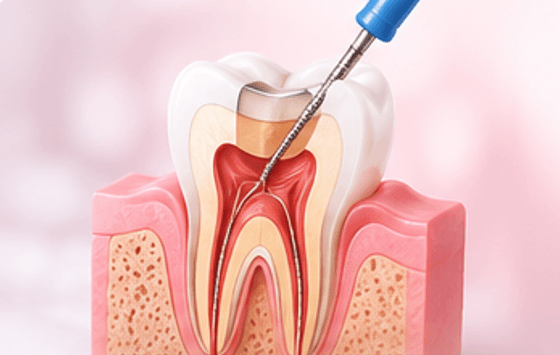
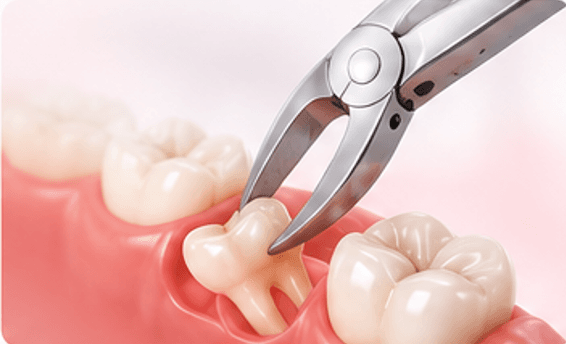
Treatment follows the cause, not the intensity of the ache. If decay is still short of the pulp, a dentist may remove the damaged tooth structure and place a restoration as part of general dentistry. If the pulp is irreversibly inflamed or infected, root canal treatment aims to clean the canal system, reduce bacteria, and seal the space so the tooth can stay in function, often with a later crown if the remaining walls are weak. If a tooth is split, unrestorable, or the infection cannot be controlled, extraction may be discussed, sometimes with later replacement options if a gap would matter for chewing or appearance.
Gum infections are treated by draining pus when needed and cleaning the root surfaces, which overlaps with gum treatment rather than with a root canal if the pulp is healthy. A high filling can be adjusted. Cracks are managed according to depth: a bonded restoration or crown may hold some teeth; others cannot be saved. Wisdom-tooth pain may need local cleaning under the flap, antibiotics only when there is spreading infection, or removal after assessment. Painkillers and cold compresses can help you travel to an appointment; they are not a substitute for locating the source.
Antibiotics do not fix a closed abscess inside a tooth. They may be considered when there is facial swelling, fever, or medical reasons that make spreading infection more dangerous, alongside dental treatment. A dentist should explain what will be done now versus what can wait, and what symptoms mean you should return sooner. If you also have damaged teeth from an old fracture, the plan may combine pain control with a later restorative phase once the infection is stable.
If left untreated
Hoping a toothache will vanish can work briefly if the pulp dies and the pressure drops. The bacteria, however, typically remain. Bone around the root can continue to break down. Swelling can appear days or weeks later, sometimes at an inconvenient moment. In rare situations, infection from upper teeth can involve the sinus, and infection from lower teeth can spread toward the floor of the mouth or neck. Those events are not the common everyday course, but they are why spreading swelling, fever, or trouble swallowing is treated as urgent rather than as “a strong toothache.”
On a slower timeline, untreated decay can destroy so much tooth that a simple filling is no longer possible. A tooth that could have been restored may then need a more complex root canal, a crown, or removal. Chronic infection can also complicate future implant or bridge planning in that site because bone volume may be reduced. Leaving pain unmanaged also trains people to chew poorly and to skip cleaning, which invites new decay and gum inflammation in other teeth.
Prevention
Prevention of toothache is mostly prevention of decay, cracks, and gum infection. Twice-daily fluoride toothpaste, cleaning between teeth, and limiting how often sugar sits on the teeth reduce new cavities. Checking old fillings before they leak is less dramatic than an emergency visit at night. A night guard may be discussed if grinding is obvious and restorations keep chipping. Dry-mouth management—water, reviewing medicines with a physician when appropriate, and extra fluoride—matters for people whose saliva is reduced.
After any dental treatment, following the dentist’s advice on chewing on the other side until numbness fades, and returning if a bite feels high, can prevent some postoperative pain from becoming a longer problem. Children benefit from supervised brushing and from not using a bottle of sweet liquid as a sleep aid. None of these steps make toothache impossible. They simply lower the chance that the first warning is a swollen face rather than a small, treatable lesion.
When to see a dentist
See a dentist promptly if toothache lasts more than a day or two, if painkillers are needed to sleep, or if biting on one tooth is consistently painful. Same-day or urgent care is more appropriate if the face is swelling, you have a fever, swallowing or breathing feels difficult, or an eye is starting to swell—those signs can indicate spreading infection. Trauma with a broken or displaced tooth also deserves timely examination, even if pain is still moderate.
You do not need to wait for a “proper abscess” before making contact. Early pulpitis is often easier to manage than a weekend emergency. If you are pregnant, have a heart condition, take blood thinners, or have poorly controlled diabetes, mention that when you seek care, because it can change how infection and medicines are handled. A dentist can then decide whether the next step is a filling, a root canal, gum therapy, extraction, or simply monitoring a sensitive tooth after a recent restoration.
Frequently Asked Questions
- Can I manage a toothache with painkillers until it goes away?
- Painkillers may take the edge off while you arrange an examination, but they do not remove decay or drain an infection inside a tooth. If the ache keeps returning, especially at night, the pulp or the tissues around the root may still be inflamed. Use medicines only as labelled, and avoid placing aspirin against the gum, which can burn tissue. A dentist still needs to find the source.
- Why does cold or heat make my tooth hurt?
- Cold often stimulates fluid in dentine tubules or an inflamed pulp. A brief zing that stops quickly can fit with sensitivity or a shallower lesion. Heat that leaves a lingering ache can suggest deeper pulp inflammation. These patterns are clues, not a home diagnosis. Cracks, new fillings, and gum recession can all change temperature responses, which is why the tooth is tested in the clinic rather than judged from one symptom alone.
- Why is toothache often worse at night?
- Lying down can increase blood pressure in the head slightly, which may intensify throbbing from an inflamed pulp. There are also fewer distractions, so the same ache feels louder. Night-time grinding can add extra load. Worse pain in bed is a common reason people finally book a visit. It does not by itself prove that a tooth needs a root canal, but it does mean the problem is unlikely to be “just sensitivity from cold water.”
- Does tooth pain always mean I need a root canal?
- No. Many aching teeth improve after a filling, a bite adjustment, or treatment of a gum pocket. Root canal treatment is considered when the pulp is irreversibly inflamed or infected, or when a tooth that already had a dying nerve needs the canal cleaned and sealed. The decision depends on tests and radiographs, not on how frightened the word “root canal” sounds. A dentist should explain why that option is on the table—or why it is not.
- Is facial swelling from a tooth an emergency?
- Spreading facial swelling, fever, limited mouth opening, or any trouble with swallowing or breathing should be treated as urgent. Infection may have moved beyond the tooth. You still need dental assessment, not antibiotics alone, in most cases. If breathing is affected, emergency medical services take priority over a routine dental slot. For milder local gum swelling, same-day dental advice is still wise.
- Can a new filling cause tooth pain?
- Mild sensitivity after a filling can occur as the tooth settles, especially if the cavity was deep. A filling that sits high can make biting sore until it is adjusted. Pain that worsens over days, spontaneous throbbing, or pain that lingers after heat should be rechecked. Sometimes the pulp does not recover after a deep restoration, and further treatment is needed. Report the change rather than assuming it will always fade.
- Why can’t I tell which tooth is hurting?
- Pulp nerves are not precise map-makers. Pain can refer to the opposite arch or to the ear. Several teeth may have fillings or decay, and gum inflammation can blur the picture. Dentists use cold tests, tapping, and X-rays to narrow the source. Treating the loudest-looking cavity without tests can miss the actual culprit. It is reasonable to need more than one appointment if the first tests are inconclusive.