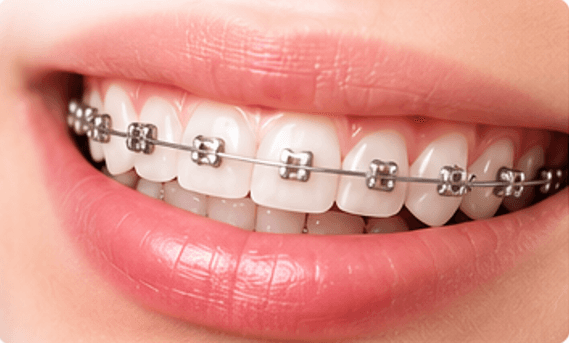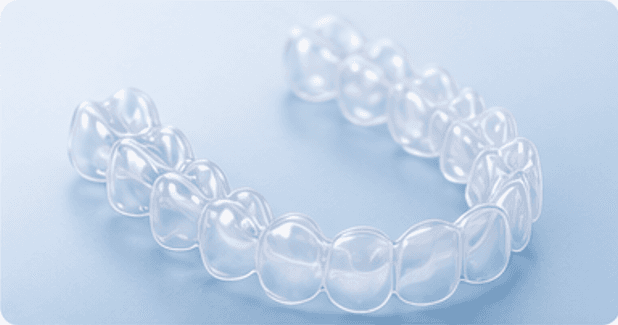
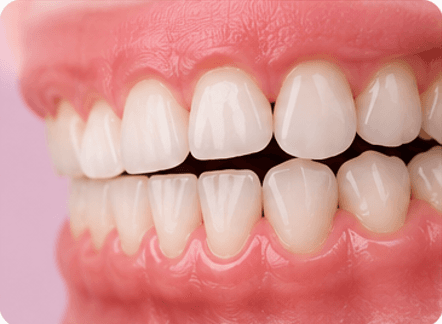
A poor bite, in patient language, means the teeth do not meet in a way that feels even, efficient, or comfortable. Clinicians use malocclusion for a mismatch between the arches: the lower teeth may sit too far back or forward relative to the upper, the bite may be too deep so that lower incisors hit the palate, too open so that front teeth do not meet, or crossed so that some upper teeth sit inside the lower ones. One side may take all the chewing. A filling or crown that sits high can create a sudden local bite problem even when the overall alignment was acceptable. Malocclusion is common and often mild. It becomes more relevant when chewing is difficult, when teeth wear or chip in a patterned way, when the gums are bitten, when speech is affected, or when jaw joints and muscles are strained—though jaw pain has many causes besides the way teeth fit. Misaligned Teeth and a poor bite overlap but are not identical: teeth can be fairly straight and still meet in a deep or shifted way, and crowded teeth can still chew reasonably. This page explains common bite patterns, how they can affect function, the limits of self-diagnosis, and how Orthodontics, Clear Aligners (Invisalign), restorations, and TMJ / Jaw Disorder Treatment may appear in a plan after proper records. It will not label your bite class from a description.
Depending on the diagnosis, care may involve Orthodontics, Clear Aligners (Invisalign) or TMJ / Jaw Disorder Treatment. A dentist can explain which option, if any, is suitable after examining your mouth.
What malocclusion can look and feel like
You might notice that front teeth do not meet when you bite on the back teeth, so biting into a sandwich is awkward. You might see that lower teeth are hidden behind the uppers, or that they stick out. A crossbite can make the jaw slide to one side to find a place to close. An edge-to-edge bite can chip thin incisal edges. A deep bite can wear the backs of upper front teeth or injure the palatal gum. None of these patterns is rare.
Feelings include chewing fatigue, food that needs to be moved around to find a working side, a sense that the bite has “changed” after a new filling, or clicking in the jaw. Clicking alone is common and not always a disease. Pain, locking, or limited opening are more concerning and deserve assessment that may include the joints as well as the teeth. Ear pain that is actually referred from the jaw is another presentation some people describe.
Appearance-related bite issues include a receding or prominent chin related to jaw size, a gummy smile related in part to how the jaws grew, or a midline that does not match. Growth, genetics, childhood habits, Missing Teeth, and drifting after Gum Disease can all contribute. Adults can develop a worse bite as teeth wear or as posterior teeth are lost and the bite collapses forward.
Common patterns: deep bite, open bite, crossbite, and shift
A deep overbite means the upper incisors overlap the lowers more than is typical. In some people this is stable and painless. In others the lower incisors bite into the palate, or the uppers wear on the inside. An anterior open bite means a gap remains between front teeth when back teeth are closed. That can relate to habits, airway and tongue posture, skeletal pattern, or a mix. It can make incising food and some speech sounds harder.
Crossbite may affect a few teeth or a whole side. A posterior crossbite can be associated with a narrow upper jaw. A functional shift means the jaw slides to avoid a premature contact. Over time that slide can look like facial asymmetry. An underbite, where lower front teeth sit ahead of the uppers, may be dental (teeth tipped) or skeletal (jaw size). Distinguishing those needs clinical exam and often X-rays.
Class II and Class III are shorthand for how the first molars and the profile relate. You do not need those labels to seek care. What matters is function: Can you chew without pain? Are teeth wearing in a way that will shorten them quickly? Is the gum being traumatised? Is the bite shifting because teeth are missing? Those questions guide whether observation, orthodontics, restoration, or joint-focused care is more relevant.
- Deep overlap that may wear teeth or injure the palate
- Open bite that can hinder biting into food
- Crossbite or a slide to one side on closing
- A sudden high feeling after a restoration
Chewing difficulty and diet
Efficient chewing spreads force across many teeth. When only a few contacts exist, those teeth can hurt or wear. People with an open bite or with missing back teeth often cut food smaller or avoid fibrous foods. That is a functional limitation. It can affect nutrition if it persists, similar to the chewing issues described with Missing Teeth. A poor bite with a full set of teeth can still be inefficient if contacts are few or unstable.
Children with a significant open bite or reverse bite may struggle with certain foods and with speech sounds. Adults who have worn their teeth down may find that the jaw overcloses, the face looks shorter, and chewing muscles work at a different length. Rebuilding worn teeth is a restorative project as well as a bite project. It is not the same as straightening crowded incisors.
If chewing pain is localised to one tooth, the bite problem may be a high filling or a crack rather than the whole malocclusion. If chewing pain is muscular, it may be more about clenching than about molar class. Sorting local tooth pain from muscle pain from joint pain is a core part of the examination. Tooth Pain on one tooth should not be treated with braces as a first step.
Tooth wear, chips, and gum trauma from the way teeth meet
When front teeth collide edge to edge, enamel chips. When a deep bite concentrates sliding on a few palatal surfaces, those surfaces cup out. When a crossbite loads a single premolar, that tooth can wear or loosen if support is poor. Patterned wear is a clue. Generalised wear from grinding can overlay a malocclusion so that both the habit and the contacts need attention.
Gum recession on a tooth that sits outside the arch, or a palatal bite wound from deep lower incisors, is tissue trauma related to position. Alignment and bite correction can reduce that trauma when the tissues are otherwise healthy. Active Gum Disease still needs periodontal treatment; moving teeth through inflamed tissue is unwise.
Damaged or Broken Teeth from bite trauma are repaired with the same tools as other chips and cracks, but the repair may fail if the colliding contact is not changed. Sometimes a small adjustment of a filling is enough. Sometimes orthodontics or a night guard, or both, are part of protecting the repair. Cosmetic covering of worn edges without a plan for the bite can look good briefly and then chip again.
Jaw joints, muscles, and what the bite can and cannot explain
The temporomandibular joints allow the jaw to rotate and slide. Disc displacement can cause clicking. Muscle fatigue from clenching can cause aching in the temples and cheeks. A poor bite has been blamed for these problems more confidently in the past than evidence always supports. Many people with irregular bites have no joint pain. Many people with joint pain have bites that look ordinary. Still, a grossly unstable bite, a recent change after dentistry, or a shift of the jaw can be worth addressing as one factor among others.
TMJ / Jaw Disorder Treatment often starts with education, soft diet for a flare, habit awareness, and sometimes a splint to reduce muscle load or to protect teeth. Irreversible grinding of many teeth to “equilibrate” the bite is not a first-line approach for joint pain in modern practice. Orthodontics to treat jaw pain alone, without a clear dental indication, is similarly cautious. Sequencing matters: calm the joints, then consider elective tooth movement if it is still desired for other reasons.
Headaches have many causes. Dental assessment is reasonable if they accompany jaw fatigue, tooth wear, or morning tightness. It is not a substitute for medical evaluation of headaches with neurological warning signs. Be wary of anyone who guarantees that changing the bite will end headaches. Honest care talks about reducing contributing dental factors, not about curing migraine by moving molars.
Approaches that may be discussed after records
Observation is appropriate for mild, stable malocclusion that does not harm teeth or gums and does not bother the person. Orthodontics and Clear Aligners (Invisalign) can change how teeth meet by moving them, within the limits of bone and gum. Severe jaw-size discrepancies in adults may need orthodontics combined with jaw surgery for a full skeletal correction; many adults instead choose dental camouflage, which has limits. Growing children may benefit from interceptive appliances in selected cases.
Restorative dentistry can reshape how teeth meet by adding height to worn teeth or by replacing missing back teeth so the bite has support. That is not “braces by filling.” It is rebuilding a collapsed or worn occlusion. General Dentistry adjustments of a single high filling can resolve a sudden poor bite after a visit. If several teeth are missing, implants or dentures may be needed before the bite can be stable; see also Dental Implants when posterior support is gone.
Retainers after orthodontics help hold a corrected bite as well as straight teeth. Wisdom teeth, restorations, and periodontal health still influence long-term stability. A bite that was corrected in the teens can change in the fifties if teeth are lost or worn. Lifelong dental care and, where indicated, replacement of missing teeth, protect the result more than a single course of appliances.
When to seek assessment
Seek care if chewing is consistently difficult, if teeth are chipping or wearing quickly, if the jaw locks or opening is limited, if a child has a marked underbite, crossbite, or open bite, or if your bite feels wrong after a restoration and does not settle in a couple of days. Sudden changes after trauma need prompt examination. Gradual crowding with a still-comfortable bite can wait for a planned orthodontic or dental visit.
Bring a list of symptoms: where it hurts, whether clicking is new, whether you clench, and whether any teeth are missing. Mention previous braces and whether you still wear retainers. If appearance of the bite or profile is your main concern, say so clearly so the discussion can cover what tooth movement can change and what it cannot (for example, nose or chin shape without surgery).
Do not start do-it-yourself aligner programmes based on a photo if you have jaw pain, missing teeth, gum disease, or crowns and bridges. Those situations need in-person records. Over-the-counter night guards can help some grinders and can also be bulky enough to change the bite if poorly fitting; professional advice is safer if you already have a complex malocclusion or joint symptoms.
Frequently Asked Questions
- Is an imperfect bite abnormal?
- Mild variation is very common. Few people have textbook contacts on every tooth. Malocclusion is a description of a pattern, and many patterns are compatible with healthy function. Treatment is considered when there is wear, gum trauma, chewing difficulty, a shift, a developmental concern in a child, or a personal wish to change alignment and bite together. Perfect occlusion is not a requirement for health.
- Can a poor bite make it hard to chew?
- Yes. An open bite, missing back teeth, a slide into a limited contact, or worn-down teeth can reduce chewing efficiency. People adapt by using one side or by choosing softer foods. Assessment looks at how many stable contacts you have and whether pain is limiting you. Replacing missing teeth, adjusting a high restoration, or moving teeth can each help in the right situation.
- Does malocclusion cause TMJ disorders?
- A simple one-to-one cause is not supported for most people. Joint and muscle problems are multifactorial. A poor bite can be one contributing factor, especially if it has recently changed or is highly unstable, but treating the bite is not automatically the cure. TMJ / Jaw Disorder Treatment usually emphasises conservative care first. Orthodontics may still be appropriate for dental reasons once symptoms are better understood.
- Why does my bite feel high after a filling?
- Anaesthesia can make it hard to judge contacts during the appointment. A little extra material, or a contact that only shows when you close fully at home, can leave one tooth hitting first. That can make the tooth sore. A short adjustment visit often solves it. Leaving a high filling can lead to inflammation of the ligament or even a crack. Call if the feeling does not settle quickly.
- Will braces or aligners fix a poor bite?
- They can improve how teeth meet when the problem is mainly dental position. They cannot fully correct a large jaw-size mismatch without surgery in adults. Aligners and braces both need a diagnosis: crowding, width, and vertical overlap are planned, not guessed. Orthodontics and Clear Aligners (Invisalign) are tools. Suitability depends on your records, gums, and whether the joints are comfortable enough to proceed.
- When should a child’s bite be checked?
- Paediatric and orthodontic guidelines often suggest an assessment around the early mixed dentition, earlier if there is a crossbite, underbite, very protruding front teeth at risk of trauma, or a habit that is affecting the jaws. Not every child needs treatment at the first visit. Timing uses growth. Thumb or dummy habits are easier to address before they fully shape an open bite, but habits are only one possible cause.
- Can missing teeth cause the bite to collapse?
- Losing back teeth can allow remaining teeth to drift and can reduce the height that holds the jaws apart. Over years the bite may look more closed and the front teeth may take more load and flare or wear. Replacing posterior support, sometimes with Dental Implants or other prostheses, is often part of rebuilding a collapsed bite. The earlier the space is planned for, the fewer secondary movements may occur, though timing is still individual.
- Should I file my own teeth if the bite feels uneven?
- No. Enamel does not grow back. Unplanned filing can open dentine, ruin the shape of a tooth, and make the bite worse. A dentist can adjust a restoration or, rarely, enamel in a controlled way after analysis. If you feel a high spot, go back for a review rather than using a nail file or grinding teeth against each other on purpose.