Find the Pattern
Separates muscle pain, joint sounds and tooth wear so the first step is not a random appliance.
669, Sector 37, Faridabad, Haryana, 121003
Monday–Sunday, 9:00 am – 8:00 pm+91 92058 32143+91 98180 14680WhatsApp

Jaw Comfort · Sector 37, Faridabad
Jaw pain, clicking or a tired face from clenching can make eating and talking feel like work. The jaw joint and the muscles around it are often involved together. At The Tooth Story, TMJ-related complaints are assessed carefully, many cases are managed conservatively, and specialist referral is arranged when dental care alone is not enough.
Has your jaw been trying to get your attention?
A click without pain does not always need treatment. Pain, locking, limited opening or tooth wear from grinding usually does need a proper look.
Led by Dr. Ritika Satija, MDS.
Start with a jaw assessment rather than guessing which night guard to buy.
Conservative jaw care
in Faridabad.
Calm the muscles.
Protect the teeth.
Many TMJ problems improve with habit advice, exercises, a custom night guard when grinding is part of the picture, and time. Surgery is not the first step. If the joint needs a different specialist, that referral is part of responsible care.
TMJ treatment addresses pain, clicking, locking and muscle tightness in the temporomandibular joints — the joints in front of your ears — and the chewing muscles that work with them.
Causes often overlap: clenching or grinding, muscle tension, a disc that is not moving smoothly, arthritis in the joint, or bite changes after tooth loss or dental work.
Dental care can protect teeth, reduce muscle loading with a splint, and help you change daytime clenching. It does not “cure” every joint problem.
Complex cases may need physiotherapy, a sleep or ENT opinion, or an orofacial pain / oral surgery specialist. That is a feature of good care, not a failure of it.
Separates muscle pain, joint sounds and tooth wear so the first step is not a random appliance.
Advice, exercises and a custom splint when indicated come before invasive joint procedures.
If you grind, a well-made night guard can reduce further enamel wear while symptoms are managed.
These signs do not all mean the same diagnosis. They do mean the joint, muscles and bite are worth examining together.
Muscle and joint pain can feel like a headache or an earache.
Noises matter more when they come with limited function.
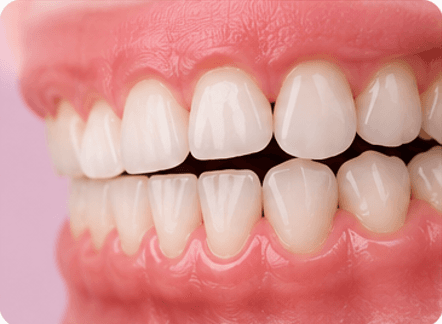
The teeth often show what the muscles have been doing at night.
Painless, long-standing clicks that do not limit opening are often monitored. New pain, locking, or rapid change should not be ignored.
The first appointment is mostly information: when it started, what makes it worse, how the teeth meet, and whether a splint is likely to help.
We ask about clicking, locking, headaches, grinding, recent dental work, injury and stress, because TMJ problems rarely have a single cause.
Opening, sounds, muscle tenderness and how the teeth meet are examined. X-rays or further imaging are used when they would change management.
You hear which part looks muscular, which looks joint-related, and whether a custom splint, habit advice or referral is the next step.
A custom night guard is made to fit your teeth if grinding or muscle loading is part of the problem. Shop-bought boil-and-bite guards are not the same as a monitored appliance.
Symptoms are reviewed. If the joint needs physiotherapy, medical imaging or a surgical opinion, that path is arranged rather than stretching dental treatment past its useful range.
A night guard manages loading and protects teeth. It does not switch off the clenching habit by itself. Exercises and daytime awareness are usually part of the same plan.
Jaw problems are easy to over-treat or dismiss. The approach here is conservative, specific, and honest about what a dentist can manage.
Painless, stable joint sounds are often explained and monitored rather than treated for the sake of doing something.
When a splint is indicated, it is made for your teeth and reviewed for fit. An ill-fitting guard can create new bite problems.
Wear, cracks and morning tightness are read as part of the same picture as the joint, not as separate complaints.
Dr. Ritika Satija’s endodontic background includes sorting tooth pain from referred muscle or joint pain — a distinction patients often need.
Injections, arthroscopy or surgical joint care are not offered as in-house defaults. The right specialist is the safer next step.
If snoring or sleep-disordered breathing may be feeding the clenching, that overlap can be discussed rather than ignored.
The aim is calmer muscles, safer teeth and a clearer idea of whether the joint itself needs another kind of care.
Habit awareness and a well-fitted splint can reduce the load that keeps the muscles sore.
A night guard cannot stop the brain from clenching, but it can stop the teeth from taking the full force.
Temple pain linked to the temporalis muscle sometimes eases when jaw muscle strain is treated. It is not a universal headache cure.
You leave knowing what is likely muscular, what is joint-related, and what would trigger a referral.
Many people improve with conservative care over weeks, not overnight. A splint often needs an adjustment period.
Questions about clicking jaws, night guards, headaches and when to worry.
Several factors can overlap: clenching or grinding, jaw injury, arthritis in the joint, disc displacement, muscle tension, or bite changes after dental work or tooth loss. Often more than one of these is involved.
Not necessarily. Many people have painless clicks that do not limit opening and do not worsen. Treatment is usually considered when clicking comes with pain, locking, limited opening or progressive change.
A guard manages loading and protects teeth. It does not switch off the underlying habit or repair every joint condition. Think of it as a long-term tool, usually combined with exercises and habit change.
If you grind, many people wear it for sleep indefinitely. Periodic checks keep the fit right. Stopping suddenly can let wear and muscle strain return.
Yes. Many people clench without noticing, especially while concentrating or during sleep. Stress management, daytime jaw posture and a night guard can all help interrupt that cycle.
A dentist who assesses TMJ is often a good start because bite, teeth and joint can be examined together. If imaging, physiotherapy or surgical opinion is needed, that referral can be coordinated.
Yes. Tension in the chewing muscles, especially the temporalis at the side of the head, can feel like a tension headache. Treating the jaw strain often reduces that pattern, though not every headache is a TMJ headache.
Some mild, stable clicks stay mild. Untreated grinding can still wear teeth, crack restorations and keep muscles sore. New locking, worsening pain or a sudden bite change should be checked rather than waited out.
Book a TMJ assessment in Sector 37, Faridabad for a conservative look at jaw pain, clicking, locking or grinding — and a clear next step.