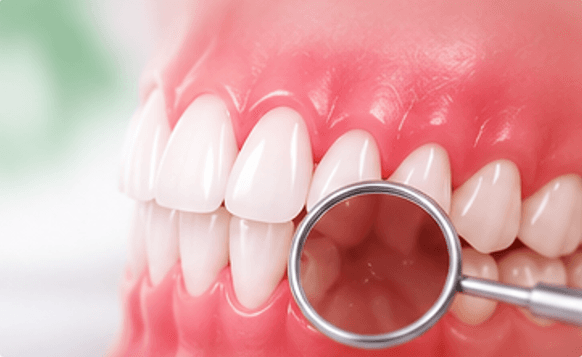
Gum disease is an umbrella term. Dentists usually separate gingivitis—inflammation of the gum—from periodontitis, in which the fibres and bone that support the teeth are damaged. Both are driven largely by bacterial plaque, but they are not the same condition and they do not deserve the same treatment plan. Many people first notice bleeding gums, bad breath, or a tooth that looks longer. Others feel almost nothing until a tooth becomes loose. Periodontitis tends to be chronic and site-specific: some teeth can be severely affected while neighbours look acceptable. Diagnosis depends on measuring pocket depths, checking whether gums bleed on probing, and looking at bone on radiographs. This page explains how gum disease develops, who is more susceptible, what “deep cleaning” actually aims to do, and why maintenance visits matter after the gums look calmer. It is educational, not a substitute for charting your own mouth.
Depending on the diagnosis, care may involve Gum Treatment or General Dentistry. A dentist can explain which option, if any, is suitable after examining your mouth.
What is gum disease?
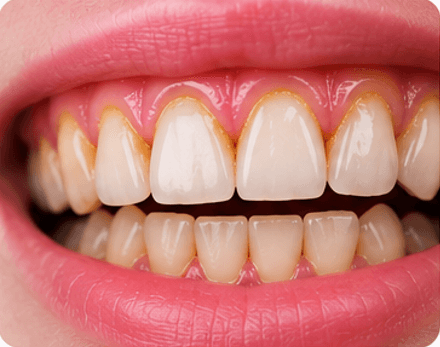
The gum forms a shallow crevice around each tooth. In health that crevice is shallow, and the junctional tissue seals reasonably well. Plaque sitting there causes gingivitis: redness, swelling, and bleeding. At this stage the bone is still intact. If inflammation continues in a susceptible person, the seal migrates down the root, a deeper pocket forms, and the immune response begins to break down periodontal ligament and alveolar bone. That deeper, destructive process is periodontitis. It is not an infection like a sudden abscess in every case; it is a long conversation between biofilm and the host that goes wrong at certain sites.
Periodontitis is classified by stage (how much damage has already occurred) and grade (how fast it seems to be progressing), using clinical attachment loss and bone levels rather than a casual glance. Terms like “pyorrhoea” that older relatives used usually referred to advanced periodontitis with pus and mobility. Modern care tries to catch the disease before teeth drift. Gum disease is also not the same as a canker sore or a viral ulcer; those are different diagnoses with different timelines. When people say “I have gum disease,” a dentist still needs to know whether they mean bleeding-only gingivitis or true periodontal breakdown.
Causes
Dental plaque biofilm is necessary for typical gum disease. The bacteria are mostly ordinary oral species organised in a community, not a single “germ” you catch from a cup. What varies is how aggressively your immune system responds and how well you disrupt the film. Tartar locks biofilm against the root. Smoking is a major modifier: it impairs healing, changes the bacterial mix, and can hide bleeding. Diabetes, especially if poorly controlled, increases risk and can worsen severity. Genetics play a role; some families lose bone despite reasonable cleaning.
Local factors steer damage to particular teeth: overhanging crowns, open contacts that pack food, crowded lower incisors, and partial dentures that are hard to clean. Mouth breathing dries the front gums. Stress and irregular routines affect hygiene more than people like to admit. Medications that cause gum overgrowth create extra folds for plaque. Periodontitis is not caused by “hard teeth” or by age alone, although lifelong accumulation and recession make older adults present with more exposed roots. HIV and certain rare immune disorders can produce unusual gum presentations that need medical coordination.
It is also important to say what is not a typical cause. One skipped brush does not create periodontitis overnight. Equally, buying a “gum toothpaste” without changing mechanical cleaning rarely reverses pockets. Nutritional fads are a weak explanation compared with plaque and smoking. Understanding cause in clinic means combining the biofilm story with your medical history, not blaming a single food.
Signs and symptoms
Gingivitis announces itself with bleeding, swelling, and sometimes tenderness. Periodontitis adds signs of damage: gums that recede so teeth look longer, increasing spaces, drifting of front teeth, mobility, pus from a pocket, and a bad taste. Bite changes can appear if teeth migrate. Some people notice that a partial denture no longer sits well. Pain is often surprisingly modest until an acute periodontal abscess flares. That quietness is why periodontitis is called a silent disease in health-education materials.
Halitosis that survives mint and tongue cleaning can come from deep pockets. Receding gums can cause sensitivity on exposed roots, which patients describe as tooth pain even though the pulp may be healthy. In aggressive patterns in younger adults, relatively little tartar may accompany rapid bone loss. Any of these signs justify a periodontal examination rather than another round of whitening strips, which will not treat pockets.
- Bleeding on brushing or probing
- Persistent bad breath or metallic taste
- Gum recession and longer-looking teeth
- Teeth drifting, spacing, or feeling loose
- Pus, swelling, or a gum boil beside a tooth
- A denture or bite that suddenly feels different
Who is at risk
Risk is higher in people who smoke, who have diabetes, who have had periodontitis before, and who clean poorly between teeth. A family history of early tooth loss is relevant. Crowded teeth, poorly contoured dental work, and irregular dental care add local risk. During pregnancy, gum inflammation can increase, though true periodontitis still depends on plaque and susceptibility. People on certain medicines for epilepsy, blood pressure, or transplant care may get enlarged gums that are harder to keep healthy.
Socioeconomic stress and limited access to care show up in population studies as higher disease burden; that is about opportunity to maintain teeth, not about character. Adolescents can have gingivitis; true periodontitis in the very young is less common and deserves a careful look. If you have missing teeth already attributed to “gums,” the remaining teeth need active maintenance because the same susceptibility is still present.
Diagnosis
Diagnosis is measurement. A periodontal probe records pocket depth and bleeding at multiple sites around each tooth. Recession is noted so attachment loss can be calculated. Furcation involvement (bone loss between roots of molars) is checked. Mobility is graded. Plaque and inflammation scores show how much of the problem is current hygiene versus established damage. Radiographs show bone patterns: even reduction versus vertical defects.
The dentist also screens for tooth-related issues that mimic or worsen gum disease, such as a cracked tooth or a failing root filling draining through the gum. Photographs and charting allow comparison at review visits. You should expect an explanation of stage and of which teeth are holding you back. A single “you have gum disease” sentence without numbers is incomplete. If the presentation is unusual—painful sloughing gums, very rapid onset—the differential may include other mucosal diseases, and a medical work-up can be appropriate.
Effect on oral health
Periodontitis reduces the foundation of the teeth. As bone is lost, teeth may flare, gaps appear, and chewing efficiency drops. Front-tooth aesthetics change as papillae collapse, leaving black triangles. Exposed roots decay more easily than enamel, so gum disease and cavities can coexist. Speech can change if front teeth drift. Chronic inflammation makes the mouth a less stable place for crowns, bridges, and implants; periodontal treatment is often needed before those options are fair to discuss.
Acute flare-ups can produce periodontal abscesses: local swelling, pain, and pus. Those episodes damage bone further if they repeat. People may start extracting teeth one by one without addressing the remaining dentition, which leaves a shorter arch that still has active disease. The social effect—covering the mouth when smiling, avoiding crunchy food—is part of oral health even though it does not show on an X-ray. Stabilising periodontitis is about keeping a functioning dentition, not about achieving a magazine gumline.
Treatment options
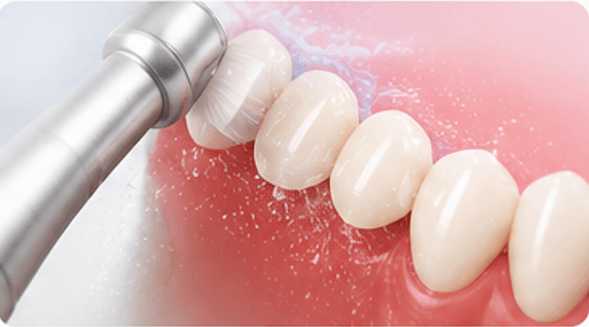
Gingivitis is treated by plaque control and removal of tartar, typically through general dentistry visits and home care coaching. Periodontitis requires a more structured approach under gum treatment: explanation of findings, risk-factor counselling (especially smoking and diabetes), and instrumentation of the root surfaces inside pockets to reduce biofilm and calculus. This is often called scaling and root planing or “deep cleaning.” Local anaesthetic may be used because the tissues are sensitive. The aim is to shrink pockets through healing and better cleaning access, not to “scrape bone back into place.”
Review appointments check whether bleeding on probing has fallen and whether some sites remain deep. Further options can include changing the shape of gum and bone surgically at selected sites, regenerating a defect in limited situations, or extracting a tooth that is a periodontal liability. Antibiotics are not a routine substitute for cleaning; they may be considered in specific aggressive or incomplete-response cases according to clinical judgement. Mouthwashes are adjuncts. If teeth are already very mobile, splinting is sometimes used for comfort while you decide on longer-term plans.
After active therapy, maintenance is the treatment. Periodontitis is usually a lifelong susceptibility. Intervals of professional cleaning are tailored to how quickly plaque and inflammation return. Orthodontics or dental implants may be discussed later only if inflammation is controlled; implants can also develop peri-implant disease if biofilm is ignored. A dentist should be frank if a tooth has a poor outlook so that you are not surprised by mobility later.
If left untreated
Untreated periodontitis tends to progress in bursts rather than in a perfectly straight line. Sites can remain stable for a while, then lose bone during a period of poorer hygiene, illness, or continued smoking. Eventually teeth can be lost. Drifting front teeth can affect bite and appearance. Abscesses can recur. Replacement of lost teeth becomes more complex if the remaining bone is reduced and if neighbouring teeth are also compromised.
Leaving gingivitis untreated is a gamble: some mouths stay in gingivitis for years; others convert. There is no home test for that conversion. Chronic bad breath and bleeding can become background noise. Systemic associations—particularly with diabetes—mean that ignoring the gums can be part of a wider health picture your physician also cares about. None of this requires scare stories. It is simply that bone lost to periodontitis does not spontaneously refill because you switched to a herbal rinse.
Prevention
Daily disruption of plaque at and under the gum margin is the core prevention. Interdental brushes sized to your spaces often outperform unused floss. Smoking cessation is one of the most meaningful risk reductions available. Diabetes care that keeps glucose more stable supports gum stability. Professional maintenance at intervals recommended after your charting prevents tartar from re-establishing in pockets you cannot reach.
Well-designed fillings and crowns that you can clean are prevention too. If you are planning braces or aligners, gum inflammation should be controlled first so appliances do not sit on swollen tissue. Prevention after treatment means you keep the new routine even when the gums no longer bleed, because bleeding was a late messenger. Children and teens need gingivitis prevention; that still matters as a foundation even though most teen bleeding is not periodontitis yet.
When to see a dentist
Seek a dental examination if you have persistent bleeding, bad breath, receding gums, drifting teeth, or a family pattern of periodontal tooth loss. If a gum swelling appears with pus or a tooth suddenly feels high and sore, arrange a sooner visit. People with diabetes or who smoke should not wait for pain; pain is a poor alarm for periodontitis.
After you already have a diagnosis, return when a previously stable site starts bleeding again, when a tooth loosens, or when you cannot keep a particular area clean despite trying. Pregnancy is a reason to be seen, not a reason to hide the problem. A dentist can tell you whether you still have gingivitis that will likely reverse with cleaning, or periodontitis that needs a sequenced periodontal plan.
Frequently Asked Questions
- What is the difference between gingivitis and periodontitis?
- Gingivitis is inflammation of the gum without loss of the supporting bone. Periodontitis includes attachment and bone loss, forming deeper pockets. Both can bleed. Only probing and often X-rays separate them. Gingivitis can usually be reversed with plaque control and tartar removal. Periodontitis can often be stabilised, but lost bone does not simply grow back to the original height in most sites.
- Is gum disease contagious?
- You do not “catch periodontitis” the way you catch influenza. Oral bacteria can be shared in saliva, but disease depends on plaque remaining on teeth and on the person’s immune response, smoking, and other risks. Kissing is not a useful explanation for bone loss. Focusing on cleaning, tobacco, and professional care is more realistic than worrying about sharing a glass.
- What does deep cleaning actually do?
- Deep cleaning instruments the root surfaces inside periodontal pockets to reduce calculus and biofilm that brushing cannot reach. It does not glue bone back. Afterward, gums may shrink as swelling falls, which can make teeth look longer. Sensitivity can appear on newly exposed roots. The success test is less bleeding, better hygiene access, and pockets that are more maintainable at review, not a single dramatic appointment.
- Can antibiotics cure periodontitis?
- Antibiotics do not replace mechanical disruption of biofilm on root surfaces. They may be considered in selected cases, such as some aggressive presentations or incomplete response, always alongside cleaning. Using leftover antibiotics for bad breath or bleeding is not appropriate and can cause side effects. A dentist should explain if medicine is truly adjunctive in your situation.
- If a tooth is loose from gum disease, can it be saved?
- Sometimes. Mild mobility may improve as inflammation reduces and if you can keep the site clean. Severely reduced bone, combined root anatomy problems, or repeated abscesses may mean the tooth has a poor long-term outlook. Splinting can add comfort. Extraction is a treatment option, not a moral judgement. The remaining teeth still need periodontal care so the same process does not continue next door.
- Can I have implants if I have had periodontitis?
- Many people with a history of periodontitis receive implants after inflammation is controlled and hygiene is reliable. The same susceptibility can affect implants (peri-implantitis) if plaque control lapses. Bone volume after tooth loss also influences planning. A dentist or specialist will usually want periodontal stability first. Implants are not a way to ignore gum disease in the other teeth.
- Do oil pulling or herbal rinses treat gum disease?
- Mechanical cleaning of teeth and gums is the intervention with a clear biological basis. Oils and herbal rinses may leave a temporarily fresher feeling; they do not remove tartar from pockets or reverse bone loss. If a product burns or delays a proper examination, it is unhelpful. Use fluoride toothpaste, interdental tools, and professional therapy as the backbone, and treat extra rinses as optional extras.
- How often should periodontitis be reviewed?
- After active treatment, many people need maintenance more often than a once-a-year scale, because pockets repopulate with biofilm. The interval is individual—sometimes three to four months, sometimes different depending on smoking, dexterity, and remaining deep sites. Your own bleeding scores and pocket chart should drive the schedule. Skipping maintenance is a common reason disease reactivates.