Treat the Inflammation
Removes the plaque and tartar driving bleeding, swelling and tenderness.
669, Sector 37, Faridabad, Haryana, 121003
Monday–Sunday, 9:00 am – 8:00 pm+91 92058 32143+91 98180 14680WhatsApp

Gum Care · Sector 37, Faridabad
Bleeding gums are not a normal part of brushing. They are usually a sign that the tissues supporting your teeth are inflamed. At The Tooth Story, gum treatment starts with a proper look at why the gums are bleeding, swollen or tender — then cleaning and care at the level your mouth actually needs.
Are your gums trying to tell you something?
An examination can show whether this is early gingivitis or a deeper gum problem that needs more than a routine polish.
Led by Dr. Ritika Satija, MDS.
Get your gums checked before inflammation becomes harder to reverse.
Healthier gums
in Faridabad.
Stop the bleeding.
Protect the foundation.
Your gums are the support system for your teeth. When they stay inflamed, brushing feels sore, breath can linger, and later treatment such as crowns, implants or aligners becomes less predictable. Careful cleaning and a maintenance plan can settle that inflammation.
Gum treatment is care for the tissues that hold your teeth in place. It covers gingivitis, gum infection, tartar below the gum line, and periodontal disease when support around the teeth has started to break down.
The work itself may be a thorough scaling, a deeper clean of the root surfaces, or a longer maintenance plan. The level depends on how far the inflammation has gone.
Home brushing cannot remove tartar once it has hardened under the gums. That is why professional cleaning is part of treatment, not an optional extra.
Healthy gums also matter before other dentistry. Elective work is safer when the foundation is not still inflamed.
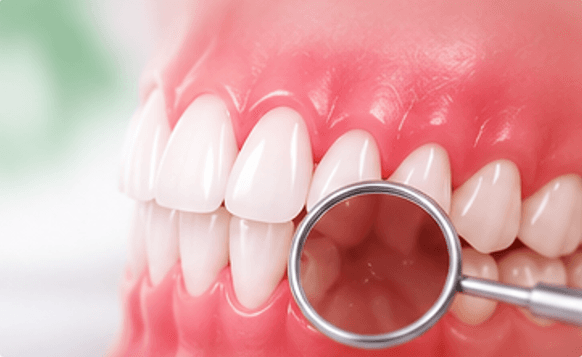
Removes the plaque and tartar driving bleeding, swelling and tenderness.
Helps preserve the gum and bone that keep teeth stable in the mouth.
Makes crowns, fillings, implants and aligners safer to plan on a healthier foundation.
Gum disease often does not hurt at first. These are the signs that deserve a proper look rather than a change of toothpaste.
Healthy gums should not bleed as a routine pattern.
Deposits under the gum line keep irritation going.
Later gum disease can affect how teeth feel.
Bleeding gums can be simple gingivitis or a sign of deeper periodontal breakdown. Only an examination, and measurements where needed, can tell which it is.
Treatment is matched to the depth of the problem. A routine scale is not the same as a deep clean, and the plan is explained before it starts.
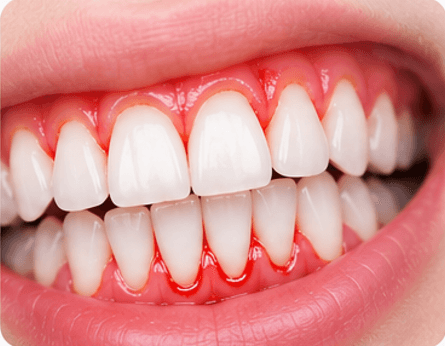
Bleeding, swelling, tartar, tooth mobility and pocket depths are checked. X-rays may be used if bone support needs to be understood.
You hear whether this is gingivitis, deeper periodontal disease, or irritation that also needs better home cleaning. The difference changes the treatment.
Deposits above and, when needed, below the gum line are removed. Deeper cleaning along the roots is used when pockets and tartar have formed under the gums.
Mild cleaning can feel simple. Deeper treatment may need local anaesthesia and can leave the gums tender for a short time afterwards.
Brushing, interdental cleaning and a recall interval are set according to how the gums respond. Maintenance is part of treatment for many patients.
Some patients need more than one visit, then a maintenance interval. That is not over-treatment — gum disease often needs monitoring after the first clean.
Gum care here sits alongside fillings, root canal treatment, implants and aligners — so the gums are treated as the foundation of the rest of the plan, not a separate afterthought.
The aim is to reduce the deposits and inflammation causing bleeding, not to mask it with mouthwash advice alone.
Routine scaling and deeper periodontal cleaning are distinguished clearly, so you are not under-treated or over-sold.
If you later need a crown, implant or aligners, gum health is checked first. Starting elective work on inflamed gums is rarely wise.
Dr. Ritika Satija’s MDS training helps separate gum pain from tooth-nerve pain when the two can feel similar.
If your gums need closer follow-up, that interval is explained. Gum disease often needs a schedule, not a one-off polish.
Technique around the gum line matters as much as the clinic visit. You leave knowing what to change, not just that you should brush more.
Results depend on the starting condition and on daily cleaning afterwards. These are the improvements patients can reasonably work towards.
Once deposits are removed and home care improves, early gingivitis often settles and brushing becomes more comfortable.
Inflammation and retained plaque are common reasons breath stays unpleasant. Treating the gums addresses the source, not only the smell.
Supporting tissues are what keep teeth serviceable. Healthier gums give natural teeth, and later restorations, a better future.
Crowns, implants and orthodontics are planned more confidently when the gums are no longer inflamed.
Comfort depends on how inflamed the gums already are. Mild cleaning can feel straightforward. Deeper treatment may leave tenderness for a day or two.
Practical questions about bleeding gums, deep cleaning and periodontal care.
No, not as a routine pattern. Occasional spotting after you start flossing again can happen for a short time, but gums that bleed most days usually mean inflammation is present and the area needs examination and cleaning.
Routine cleaning is for plaque and tartar around and slightly under the gum line. Deep cleaning is discussed when gum disease involves deeper deposits along the roots. Your dentist recommends the level based on pocket measurements, not on a package name.
Yes. Inflammation, infection and retained plaque can all contribute to persistent bad breath. That is why mouthwash alone often fails. A gum-health assessment looks for the source rather than covering the smell.
It depends on how inflamed the tissues are and how deep the cleaning needs to go. Mild scaling can feel like a thorough clean. Deeper treatment may need local anaesthesia, and some tenderness afterwards is common. That should settle as the gums recover.
Often yes, if inflammation or periodontal disease is present. Restorative and implant work is more predictable on a healthier foundation. Starting elective treatment while the gums are still unhealthy is rarely the right sequence.
Many people with a history of gum disease do. The interval depends on how advanced the disease was and how stable the tissues stay afterwards. Maintenance is how we keep the improvement, not a sign that the first clean failed.
No. Hard brushing can add to recession and does not remove tartar under the gums. Use a soft brush, clean along the gum line, and have the deposits professionally removed.
Early gingivitis can often be turned around with professional cleaning and better daily care. More advanced periodontal disease is usually managed rather than fully reversed, with the aim of stopping further loss of support. An examination is needed before anyone can say which applies to you.
Book a gum assessment in Sector 37, Faridabad if brushing makes you bleed, breath will not settle, or you have been told you need a deep clean.