Treat the Source
Removes the infected tissue causing the problem.
669, Sector 37, Faridabad, Haryana, 121003
Monday–Sunday, 9:00 am – 8:00 pm+91 92058 32143+91 98180 14680WhatsApp

Root Canal Specialist · Sector 37, Faridabad
Tooth pain, sensitivity or swelling can make you wonder whether the tooth can still be saved. At The Tooth Story, Dr. Ritika Satija provides specialist root canal care focused on relieving the source of infection, treating the tooth precisely and preserving your natural tooth whenever possible.
Is your tooth showing these signs?
An evaluation can determine whether root canal treatment can relieve the problem and help save the affected tooth.
Led by Dr. Ritika Satija, Endodontist | Root Canal Specialist.
Get your tooth evaluated before the problem gets worse.
Painless Root Canal Care
in Faridabad.
Relieve the pain.
Keep your natural tooth.
Specialist endodontic care for children, teenagers and adults—from treating infected baby teeth with pulpotomy or pulpectomy to conventional root canal treatment for permanent teeth. With careful diagnosis, modern techniques and clear, transparent treatment planning, our focus is simple: comfortable care that gives your natural tooth the best chance to stay healthy.
Root canal treatment is used when the inside of a tooth becomes infected or badly inflamed. This can happen because of deep decay, a crack, an injury, or repeated treatment on the same tooth.
Inside every tooth is a soft tissue that contains nerves and blood vessels. When this tissue becomes infected or damaged and cannot heal on its own, a root canal may be needed.
During treatment, the infected tissue is removed, the inside of the tooth is cleaned and disinfected, and the root canals are sealed. The tooth is then restored so you can use it normally again.
If the tooth can be safely saved, a root canal can help you keep your natural tooth instead of having it removed.
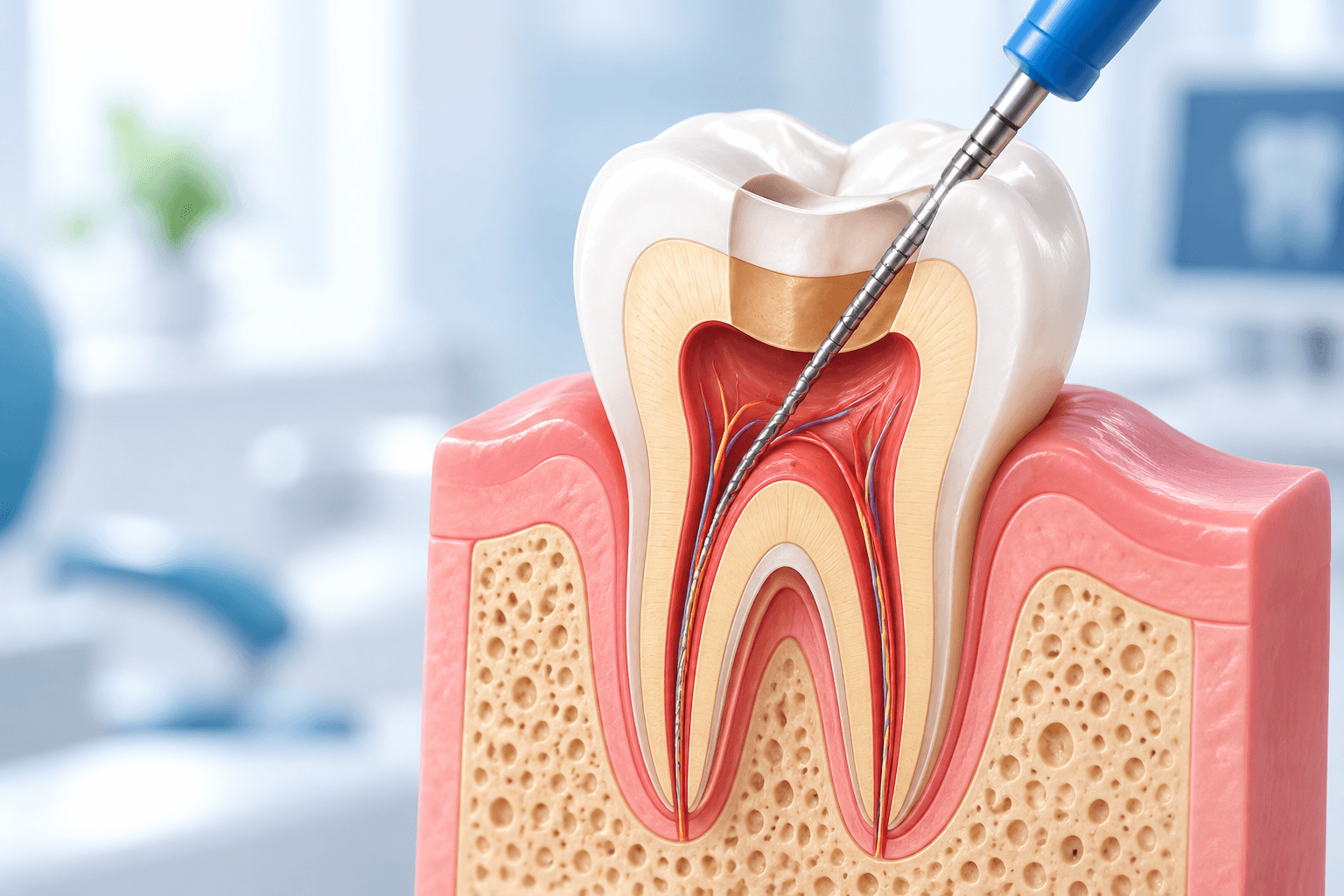
Removes the infected tissue causing the problem.
Cleans the inside of the tooth and seals the canals to help prevent infection from returning.
Helps you keep your natural tooth when it can be treated and restored.
Not every toothache needs a root canal. But some symptoms are a sign that the inside of the tooth may need to be checked.
Persistent or severe tooth pain should not be ignored.
Sensitivity to hot or cold that lasts for a while may mean that the inside of the tooth is inflamed.
Swelling, deep decay or damage to a tooth can sometimes affect the tissue inside it.
These signs do not automatically mean you need a root canal. A dental examination and, when needed, an X-ray can help find the actual cause of the problem.
Once the tooth has been examined and a root canal is advised, the treatment is carried out in a few careful steps.
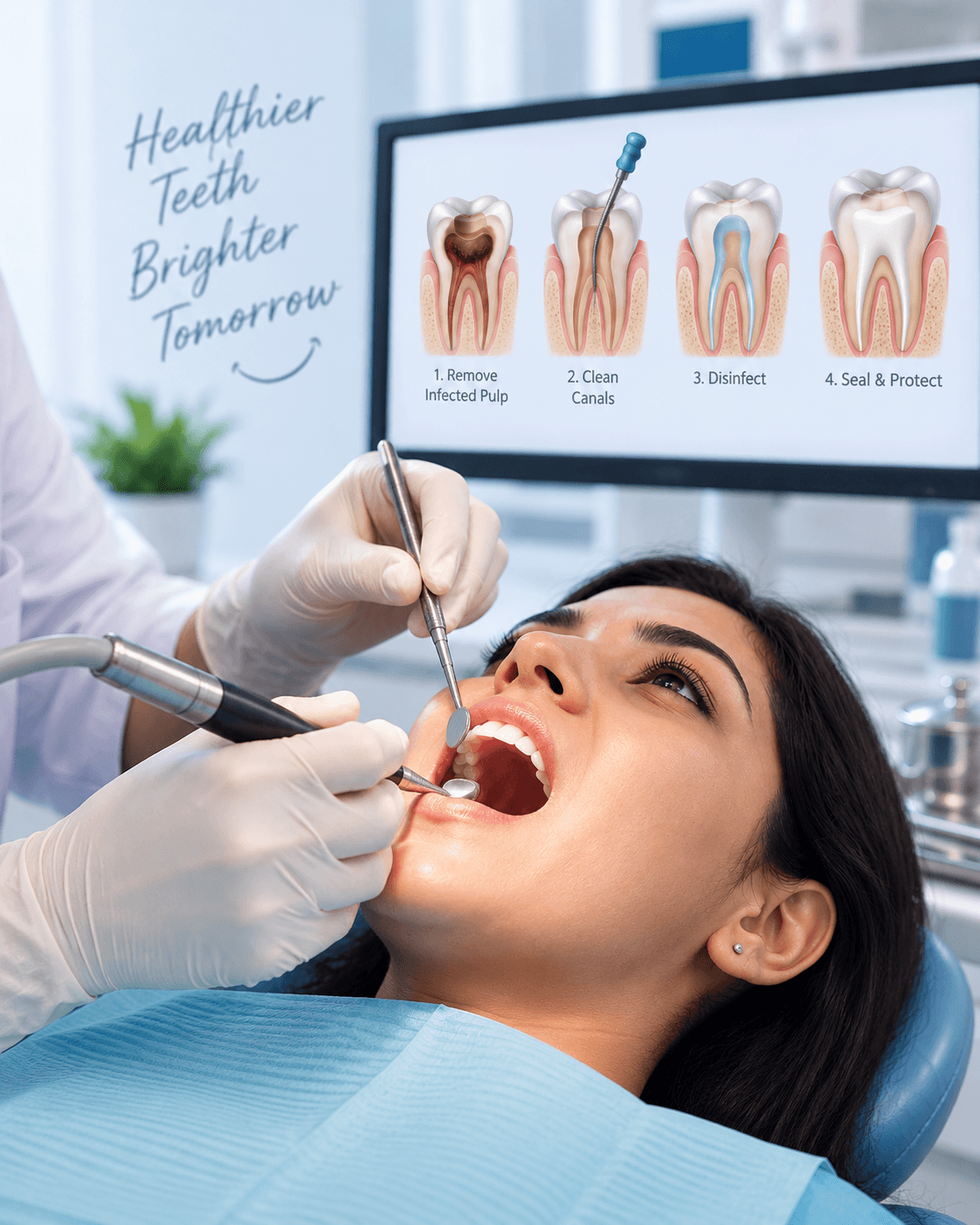
The tooth is examined and an X-ray may be taken to understand the roots and the extent of the problem.
The area around the tooth is numbed with local anaesthesia before treatment begins.
A small opening is made in the tooth. The infected tissue is removed, and the root canals are carefully cleaned.
After cleaning and disinfection, the canals are sealed to help prevent infection from coming back.
The tooth is restored with a filling or, when additional protection is needed, a crown.
Some root canals can be completed in one visit, while others may need more than one visit. This depends on the tooth and the extent of infection.
Root canal treatment is not the same for every tooth. At The Tooth Story in Sector 37, Faridabad, treatment is planned after examining the tooth and understanding what is causing the problem.
Treatment is planned with specialist attention to the small and sometimes complex canals inside the tooth.
We first identify what is causing your pain before deciding whether a root canal is actually needed.
The tooth is numbed before treatment, and the procedure is explained step by step so you know what to expect.
Appropriate dental technology is used to examine the tooth and support careful treatment planning.
When a tooth can be saved, we focus on treating it rather than removing it.
We explain the next steps clearly, including the restoration and care your treated tooth may need.
Common questions about root canal treatment in Faridabad.
In a world where almost everything is replaceable, our natural teeth are not. When a natural tooth can be preserved, saving it is often the best choice.
An endodontist specialises in treating and preserving teeth affected by infection, inflammation, or injury—helping you retain your natural tooth and smile for years to come.
Root canal treatment is designed to relieve the pain caused by infection or inflammation inside the tooth—not cause it. With modern techniques, effective local anaesthesia, and advanced technology, most patients find the procedure comfortable and similar to having a routine dental filling.
As specialists in managing tooth pain, endodontists focus on keeping you comfortable throughout treatment while addressing the underlying cause of your discomfort.
Many routine root canal treatments can be completed in a single visit, while complex cases or significant infection may require additional appointments.
Endodontists are specialists in root canal treatment and assess each tooth individually to determine the right approach. Don't worry if your treatment needs more than one visit—each appointment is planned to ensure thorough treatment, comfort, and the best possible outcome for your tooth.
A crown is often recommended after root canal treatment, particularly for back teeth, as they can become more susceptible to fracture due to the loss of tooth structure.
However, not every root-treated tooth necessarily needs a crown. Your endodontist will assess the remaining tooth structure, its location, function, and overall condition before recommending the most appropriate restoration.
The goal is to protect your treated tooth, restore its function, and help you keep your natural tooth for years to come.
Most patients can return to their normal routine the same day. Mild tenderness or sensitivity while chewing is common and usually settles within 1–2 days.
Avoid chewing hard foods on the treated tooth until it is permanently restored, and maintain your usual oral hygiene. A follow-up appointment may be needed for a final restoration, such as a crown, depending on the tooth.
If you experience persistent pain, swelling, or worsening symptoms, contact your dentist or endodontist.
If a tooth needs root canal treatment, delaying care can allow the infection to progress and damage the surrounding tissues and bone. Even if the pain temporarily subsides, it does not necessarily mean the infection has healed.
A tooth may be successfully saved with timely treatment, but delaying care can increase the risk of fracture or even tooth loss. If the tooth cannot be saved, extraction and replacement with an implant, bridge, or other restoration may be required—often involving more extensive treatment and higher costs.
Timely treatment gives your natural tooth the best chance of being preserved.
With proper care, a root canal-treated tooth can last for many years and potentially a lifetime. Long-term success depends on timely and appropriate restoration, good oral hygiene, regular dental check-ups, and avoiding excessive stress on the tooth.
With the right care, preserving your natural tooth can be a long-term solution.
Sometimes, a tooth that has already undergone root canal treatment may develop infection or symptoms again. This can happen due to complex root anatomy, missed or untreated canals, new decay, leakage around the restoration, or incomplete healing.
This does not necessarily mean the previous treatment was unsuccessful. Endodontists are specialists in managing complex root canal cases and retreatment, using advanced techniques to carefully identify and address the underlying problem.
In many cases, retreatment can help preserve the natural tooth and restore it to health.
Root canal treatment starts from ₹4,000, with the final cost depending on the tooth, complexity of the case, and treatment required.
Saving a natural tooth is often more cost-effective than extraction followed by replacement with an implant or bridge.
Your dentist or endodontist will recommend the appropriate treatment after evaluating your tooth.
Advanced magnification and scanning technology help the endodontist visualise complex root anatomy, identify canals, and assess the tooth accurately. This supports precise treatment planning and careful execution of root canal care.
Magnification improves visibility of fine detail inside the tooth, while scanning and diagnostic imaging help evaluate the roots and surrounding structures so treatment can be planned and carried out with greater accuracy.
Speak with our dental team for a personalised evaluation if you may need root canal treatment in Faridabad.