Relieve Infection
Removes a tooth that is trapping food, causing swellings, or damaging the molar beside it.
669, Sector 37, Faridabad, Haryana, 121003
Monday–Sunday, 9:00 am – 8:00 pm+91 92058 32143+91 98180 14680WhatsApp

Oral Surgery · Sector 37, Faridabad
Some teeth cannot be saved. A wisdom tooth may be stuck, a broken tooth may sit below the gum, or infection may keep returning around a root that will not settle. At The Tooth Story, oral surgery is planned after imaging and a clear discussion of why removal is being advised — and how recovery is managed afterwards.
When might a tooth need surgical care?
Not every wisdom tooth needs to come out. An examination and X-ray show whether watching, treating, or removing it is the safer path.
Led by Dr. Ritika Satija, MDS.
Get an assessment before an impacted or infected tooth becomes an emergency.
Careful surgical dentistry
in Faridabad.
Remove what cannot stay.
Protect what remains.
Wisdom-tooth removal and surgical extractions are carried out under local anaesthesia, with the steps explained beforehand. The focus is a controlled procedure, clear aftercare, and a plan for whether the space should later be left, restored or prepared for an implant.
In this setting, oral surgery usually means removing a tooth that cannot be taken out with a simple forceps extraction — most often an impacted wisdom tooth or a tooth broken below the gum.
The procedure may involve lifting a small gum flap, dividing the tooth so it can be removed in sections, smoothing bone, and placing stitches.
Bone grafting at the site is sometimes discussed when an implant is planned later. It is not automatic for every extraction.
If a tooth can still be saved with root canal treatment, that option is considered first. Surgery is advised when leaving the tooth creates more risk than removing it.
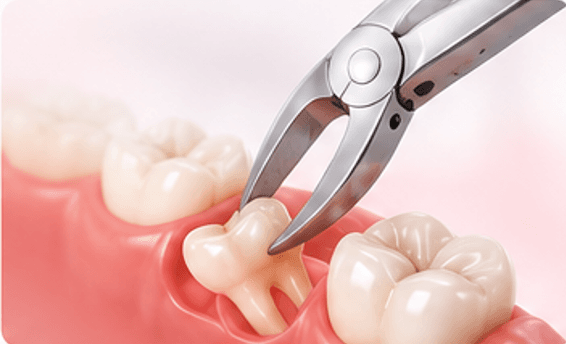
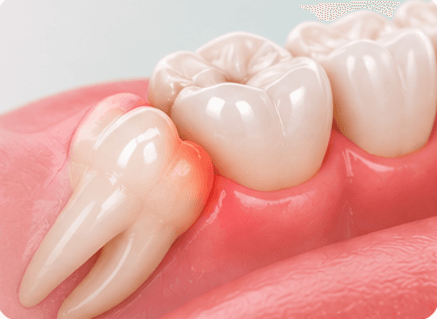
Removes a tooth that is trapping food, causing swellings, or damaging the molar beside it.
Sectioning and careful bone work reduce the force needed compared with pulling a stuck tooth blindly.
Aftercare and, when relevant, later implant or orthodontic plans are discussed before the tooth comes out.
A tooth is not removed because it is a wisdom tooth. It is removed when keeping it is likely to cause more harm than taking it out.
Problems usually start when there is not enough room.
Some teeth cannot be removed simply.
Removal is sometimes needed so other care can start safely.
Fully erupted, well-aligned wisdom teeth that you can keep clean may not need removal. An X-ray is how we judge position, roots and the nerve or sinus nearby.
The appointment is structured so you know why surgery is advised, what you will feel, and how the first few days of healing should go.
The tooth, gums and neighbouring teeth are checked. X-rays, and when needed more detailed imaging, show root shape and closeness to nerves or the sinus.
You hear whether watching, root canal treatment, or removal is the responsible option — including recovery, stitches and any grafting if an implant is later planned.
Local anaesthesia is used so the site is numb before the procedure starts. You should feel pressure, not sharp pain. Extra comfort measures can be discussed if you are anxious.
A small gum flap may be raised, the tooth may be divided, and bone around it smoothed. Stitches are placed when they will help the site heal cleanly.
You leave with written instructions on biting on gauze, food, rinsing, medicines and warning signs such as bleeding that will not stop or pain that worsens after day three.
Some people have all problem wisdom teeth removed in one visit. Others do better one side at a time. That choice depends on complexity, medical history and your preference.
Surgical dentistry here is conservative by habit: if a tooth can be saved, that is discussed. If it cannot, the removal is planned rather than improvised.
Dr. Ritika Satija is an MDS Endodontist, so the question of whether a tooth can still be root-treated is a genuine part of the consultation.
Root shape, nerve position and sinus closeness are reviewed so the procedure is planned, not guessed.
You should understand what you will feel. Pressure is normal. Sharp pain is a reason to pause and add more anaesthetic.
Dry socket prevention, diet and when to call are explained in writing, not left as vague advice to take it easy.
If the space may need an implant or orthodontics later, that is raised before the extraction so grafting or timing can be considered.
Bleeding disorders, medicines and poorly controlled medical conditions may mean surgery is delayed or coordinated with your physician.
Surgery solves a local problem. It does not automatically straighten other teeth or replace the missing one unless that is planned separately.
Taking out a wisdom tooth that keeps trapping food can stop the cycle of swelling and antibiotics.
A tilted wisdom tooth can damage the second molar beside it. Removing it can protect a tooth that is more important for chewing.
Once the surgical site settles, the throbbing, bad taste and difficulty opening that came from the infected tooth should ease.
Orthodontics and implants are easier to plan when a hopeless or impacted tooth is no longer in the way.
Most people manage the first days with rest, cold compresses and the medicines advised. Healing of the gum takes one to two weeks; the bone underneath continues to remodel for longer.
Questions people ask before wisdom-tooth removal and surgical extractions.
The area is numbed with local anaesthesia before anything starts. You should feel pressure and movement, not a sharp cutting pain. After the visit, soreness is expected and is usually managed with the pain relief advised. Difficulty of the tooth affects how you feel the next day more than the minutes of the procedure itself.
No. Wisdom teeth that have erupted fully, sit in a reasonable position, and can be kept clean may be left and monitored. Removal is advised when they cause pain, infection, crowding against the next tooth, or other clear risk on examination and X-ray.
Most people return to routine work or school within two to three days. Soft tissue usually settles over one to two weeks. Bone in the socket continues to heal for months, which you will not feel in the same way.
Dry socket happens when the blood clot is lost too early and bone is exposed, causing a distinct, often delayed pain. Avoid smoking, spitting, straws and vigorous rinsing for the first 24–48 hours. If pain worsens after day three, come back — it is treatable.
Not for every extraction. Grafting is mainly discussed when you plan to replace the tooth with an implant and want to preserve bone volume at the site. It is a planning decision, not a default add-on.
Sometimes yes, if the teeth are suitable and you prefer one recovery period. Staging can be wiser when one tooth is much more complex, or when your medical fitness and comfort make a shorter visit safer.
Stay with soft, cool or lukewarm food for two to three days — yoghurt, khichdi, mashed dal, scrambled eggs, soft fruit. Smoothies are fine without a straw. Avoid crunchy, spicy or very hot food until the site has started to settle.
Contact the clinic for heavy bleeding that does not stop with pressure after an hour, pain that increases after the third day, fever, pus, or numbness that has not begun to improve within a week. Mild oozing and day-two swelling are more typical.
Book an oral surgery assessment in Sector 37, Faridabad if a wisdom tooth hurts, a tooth is broken at the gum, or infection keeps returning.