Screen and Refer
Risk signs can be recognised in the dental chair, then testing is arranged through a sleep physician.
669, Sector 37, Faridabad, Haryana, 121003
Monday–Sunday, 9:00 am – 8:00 pm+91 92058 32143+91 98180 14680WhatsApp
Dental Sleep Support · Sector 37, Faridabad
Snoring and broken sleep are not only a partner’s complaint. Obstructive sleep apnea is a medical condition in which the airway collapses during sleep. Dentists cannot diagnose it on their own, but they can screen, work with a sleep physician, and provide a custom oral appliance when that is the agreed treatment.
Are sleep and breathing worth a dental conversation?
A sleep study ordered by a physician is how sleep apnea is diagnosed. A dental visit can start the screening and, after diagnosis, discuss an oral appliance if you are eligible.
Led by Dr. Ritika Satija, MDS.
Ask about screening if snoring and daytime fatigue are part of your story.
Dental support for sleep
in Faridabad.
Screen. Refer.
Fit an appliance if suitable.
Mandibular advancement devices hold the lower jaw slightly forward in selected mild-to-moderate cases, and for some people who cannot use CPAP. They are custom-made and followed up. They are not a boil-and-bite snore gadget from a chemist.
Obstructive sleep apnea happens when the airway narrows or collapses during sleep, fragmenting rest and dropping oxygen. Diagnosis belongs with a sleep physician and a sleep study.
A dentist can notice risk signs in the mouth — a crowded airway, large tongue, worn teeth from grinding — and refer you for proper testing.
After a diagnosis, a custom mandibular advancement device may be appropriate for mild-to-moderate OSA, or when CPAP cannot be tolerated. Severe OSA is often still better treated with CPAP.
The Tooth Story does not treat sleep apnea as a DIY dental product. Collaboration with medical care is part of the pathway.
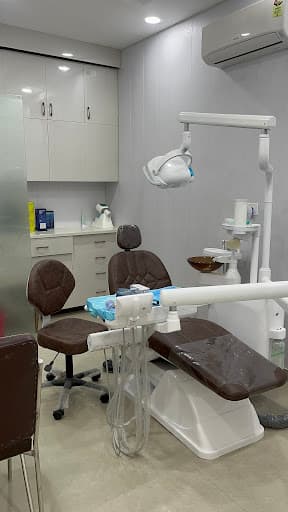
Risk signs can be recognised in the dental chair, then testing is arranged through a sleep physician.
A fitted mandibular advancement device is an option for eligible patients after diagnosis.
CPAP, ENT care or further titration remain on the table if the appliance is not enough.
These clues warrant screening. They are not a diagnosis by themselves.
Partners often notice what you cannot.
Fragmented sleep shows up after sunrise.
The mouth sometimes carries the story of the airway.
Not all snorers have sleep apnea. Loud snoring with witnessed pauses, high blood pressure or marked daytime sleepiness should be medically evaluated rather than treated with a store-bought snore clip.
The order matters: screening, medical diagnosis, then — if appropriate — a custom appliance and follow-up sleep testing.
We ask about snoring, sleepiness, grinding and medical history, and look at the airway, jaws and teeth. This is risk-spotting, not a diagnosis.
If risk is present, testing is arranged medically. Polysomnography or a validated home study is how OSA is confirmed and graded.
CPAP, lifestyle measures, positional advice, surgery in selected cases, or a mandibular advancement device may be considered. The dentist fits the appliance when that is the agreed option.
Impressions or scans are used to make a device that advances the lower jaw in a controlled way. Over-the-counter boil-and-bite guards are not equivalent.
Fit, jaw comfort and snoring reports are reviewed. A follow-up sleep study may be needed to check whether breathing events have improved enough.
An oral appliance is not a replacement for medical judgement. If a follow-up study shows the device is not reducing events enough, CPAP or another path is reconsidered.
The clinic’s role is specific: screening, custom appliances for eligible patients, and coordination with sleep medicine — not independent diagnosis.
Sleep apnea is not diagnosed from a dental look alone. You will be told when a sleep study is required.
Mandibular advancement devices are made to fit and are adjustable. Unmonitored boil-and-bite products can move teeth without treating OSA well.
For many people with severe OSA, CPAP remains more effective at reducing events. An appliance is not sold as a universal upgrade.
Dr. Ritika Satija’s training in occlusion matters because oral appliances load the jaw and teeth and need dental follow-up.
Grinding, morning tightness and appliance comfort sit next to sleep care, so the jaw is not ignored while treating the airway.
Devices wear out, need titration and can affect the bite. Reviews are part of treatment, not an optional extra.
Benefits depend on a confirmed diagnosis and on wearing a custom, adjusted device. They should be checked, not assumed.
Selected mild-to-moderate cases, and some people who cannot tolerate CPAP, may do well with a mandibular advancement device.
Reducing airway collapse often reduces snoring, though snoring alone is not the treatment target in OSA.
Some patients wear an oral appliance more consistently than a mask. Real-world use matters as much as a laboratory number.
Because the device sits on teeth, bite changes and jaw comfort can be watched by the same clinic that made it.
There is usually an adjustment period of one to three weeks: extra saliva, mild jaw stiffness, or a different morning bite that should ease. Lasting pain should be reviewed.
Snoring versus apnea, CPAP versus dental devices, and what a dentist can and cannot do.
No. Snoring is noisy airflow through a narrowed airway. Sleep apnea is when airflow stops or drops enough to disturb oxygen and sleep. Not all snorers have apnea, but loud snoring with pauses should be evaluated.
No. Diagnosis needs a sleep study arranged through a sleep physician. A dentist can screen for risk, spot grinding and airway clues, refer you, and later provide an oral appliance if that is indicated.
For mild-to-moderate OSA, custom mandibular advancement devices can be an effective option. For severe OSA, CPAP is generally more effective at reducing events. Because some people wear an appliance more consistently, real-world results can still be useful — but that is judged with follow-up, not assumed.
Most people need one to three weeks to adapt. Mild jaw stiffness, extra saliva or slight discomfort is common and usually settles. Persistent pain or a bite that does not recover in the morning should be reviewed.
Boil-and-bite products are not custom, not titrated, and not monitored. They may not advance the jaw enough and can move teeth. For diagnosed OSA, a custom device with follow-up is the safer dental option.
Yes. Extra weight around the neck increases the chance of airway collapse. Weight loss, when appropriate, is one of the more useful medical lifestyle changes and sits alongside CPAP or an appliance — it does not replace diagnosis.
A well-cared-for custom device often lasts about two to five years, depending on material and how heavily you clench. It needs checks, occasional adjustment and eventual replacement.
A follow-up sleep study may show that events have not fallen enough. Options then include further titration, combining with CPAP, switching to CPAP, or ENT/surgical referral. The goal is effective treatment, not loyalty to one device.
Book a dental sleep screening in Sector 37, Faridabad. If a sleep study confirms OSA, we can discuss whether a custom oral appliance belongs in your medical plan.